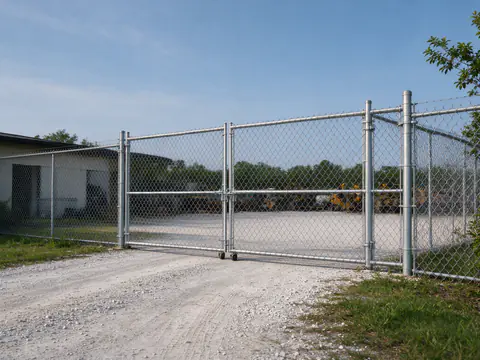
An automatic gate is a moving machine in the middle of a driveway, and it has to be planned like one. Palisades Hammond Fence installs automatic gate systems on swing and sliding driveway gates around Hammond and nearby towns: the operator, the power to run it, the controls that open it and the safety devices that keep it from closing on someone. Installation is carried out by licensed and insured fence contractors, and electrical work is done by a licensed electrician where the job requires one.
Adding an opener changes the scope. A manual gate is a fence part; an automated gate brings in power, controls and the obligation to protect anyone in its path. The gate itself is covered on the driveway gate page, and smaller gates on the gate installation page.
Start with a gate that moves freely by hand
An operator does not fix a bad gate; it exposes one. Before any opener is chosen, the gate should swing or roll the full distance by hand without dragging, rebounding or binding. A leaf that sags, a hinge post that leans (a gate repair job first) or a sliding gate that sticks on its track forces the operator to work harder every cycle, which shortens its life and can confuse the obstruction sensing that is supposed to stop it when it hits something.
The posts matter more under power than by hand. An operator pushes and pulls the leaf from or near the hinge post, adding force to a post already carrying the gate’s weight. In the poorly drained silt loams that USDA maps around Hammond, where the seasonal water table can sit within inches of the surface, a hinge post that was barely adequate for a manual gate can begin to move once an operator is mounted on it. The wet clay post guide explains why.
Gate operators: swing and slide
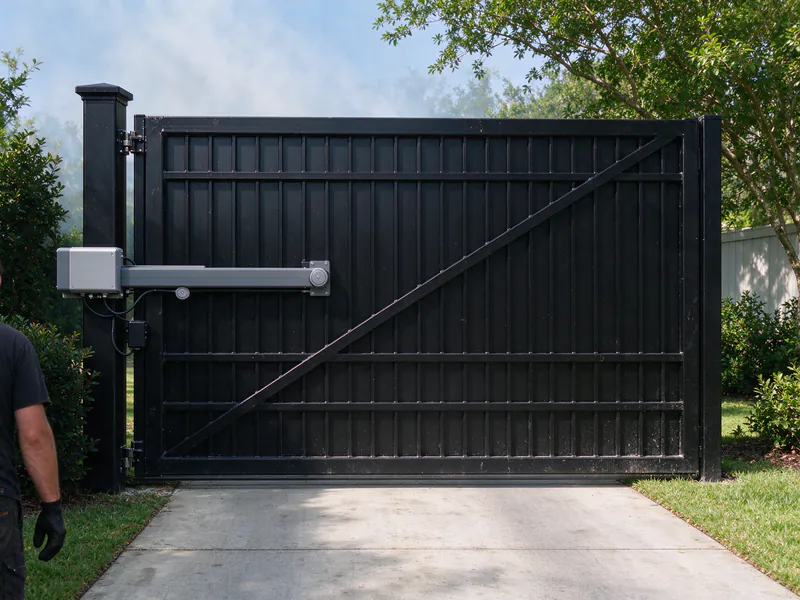
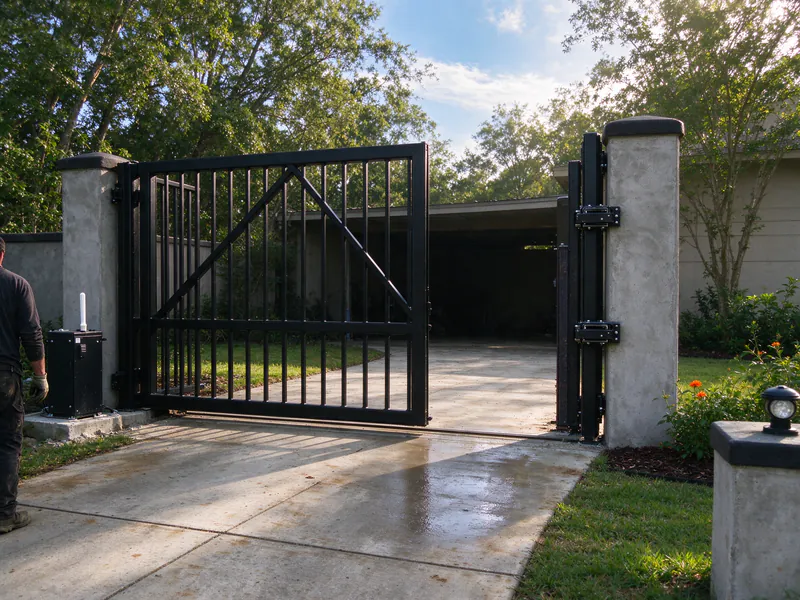
Swing gate operators push each leaf open with an arm. Articulated arms mount on the post face and suit leaves where the hinge is set out from the post; linear arms mount between post and leaf and need room behind the post. Double gates get one operator per leaf, synchronized so the leaves close in order.
Slide gate operators sit on a pad beside the opening and drive the gate along a chain or rack. A sliding gate needs runback space along the fence equal to the opening, and the swing vs sliding gate guide compares the two layouts.
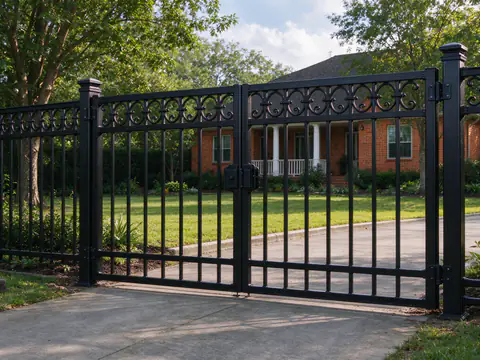
Operators are rated by the gate weight and length they can move and by how many cycles a day they are built for. A residential operator on a heavy steel leaf that opens dozens of times a day, or a solid leaf exposed to wind, is a mismatch that shows up as overheating and stalls. Heavy ornamental leaves, such as wrought iron gates, need an operator rated for their weight.
Match the operator to the gate
Send the gate's width, material and whether it swings or slides. The operator, power and controls are sized from those.
Power: line voltage or solar
Line power from the house is reliable through any stretch of cloudy weather and supports heavier gates and more cycles. It means a circuit, a trench and conduit to the gate. Louisiana’s construction code adopts the National Electrical Code (the 2020 edition, with the 2023 edition taking effect January 1, 2027), and wiring work is done by a licensed electrician where the job requires one. Any trench is excavation under Louisiana’s damage prevention law, so 811 is notified 48 to 120 hours before digging.
Solar power avoids the trench. A panel charges a battery that runs the operator, which works for a moderate number of daily cycles on a lighter gate with the panel in direct sun. Tall pines and live oaks shading the drive, a heavy solid leaf, frequent use and long cloudy spells all drain the battery faster than the panel refills it.
Whichever source is used, low-voltage control wiring for keypads and sensors also runs to the gate, so conduit is often laid under a drive or walk before it is paved, even if the operator comes later.
Access controls
How the gate opens is a separate decision from what moves it:
- Remotes in each vehicle, the simplest option for a household.
- A keypad on a post within reach of a driver’s window, set back far enough that a car can pull off the road while the gate opens.
- A phone, app or intercom unit for letting in visitors and deliveries from the house.
- A free-exit sensor, such as a vehicle detector in the drive, so the gate opens for cars leaving without anyone pressing a button.
Inside Hammond, the keypad post and gate sit outside the street right-of-way, and the city’s sight triangle at the driveway is checked on the drawing. If a subdivision or fire district asks for a specific access method for emergency vehicles, that is confirmed for the address.
Entrapment protection is part of the scope
A gate that moves on its own can trap or strike a person, a pet or a vehicle. The hazard zones are predictable: the arc a swing leaf sweeps, the gap where a leaf closes against a post or the other leaf, the space between a sliding gate and the post it rolls past, and the hinges, rollers and chain where fingers can be drawn in.
Protection comes in layers:
- Inherent sensing in the operator. The operator detects resistance and stops or reverses.
- External entrapment devices. Photo eyes across the opening and in the swing path, and contact or non-contact edge sensors on the leading edge and the post. The operator’s instructions specify which devices must be connected and where; the installation includes them.
- Guarding. Pinch points at rollers and hinges are covered, and gaps in the gate face near moving parts are closed so a hand cannot reach through.
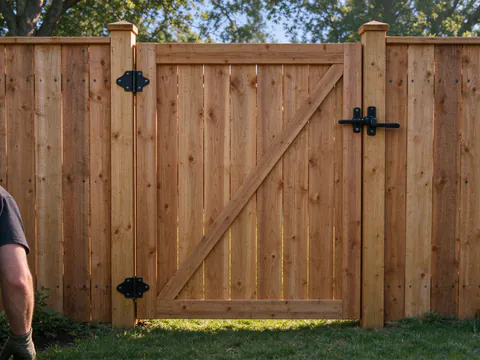
- Separation. People walk through a separate walk gate, never the driveway gate, and the controls are placed so the person operating them can see the gate move.
None of this is a one-time setup. Sensors get knocked out of line, batteries die and lenses get dirty, so the walkthrough at the end covers how to test the devices and how to use the manual release.
Storms, outages and upkeep
Storms reach this area often: FEMA has declared major disasters covering Tangipahoa Parish for hurricanes from Katrina to Ida in 2021 and Francine in 2024. Wind against a solid leaf strains the operator, and a long outage leaves the gate on its battery or its manual release. Knowing where the release key is matters more than any feature on the remote. If storm damage leads to an insurance claim, the storm-damaged fence insurance guide covers documentation.
Routine upkeep is light but regular: clear the photo eyes and the track, lubricate hinges and rollers, check that the gate still reverses when it meets an obstruction, and replace backup batteries on the maker’s schedule.
Permits and cost
The gate and its posts go on the City of Hammond fence permit ($10 residential, $50 commercial, doubled if work starts first); electrical work can carry its own permit, confirmed for the address. A residential job above $7,500 requires the contractor to hold at least a home improvement registration with the Louisiana State Licensing Board for Contractors. The fence permit guide covers permits outside city limits.
There is no published Hammond-area price for automatic gates. The cost follows the gate’s type and weight, the operator, how far power has to run, the access controls and the safety devices. The gate cost guide lays those out item by item, commercial fence installation covers gates for businesses and shared entrances, and the fence cost estimator prices the fence on either side.