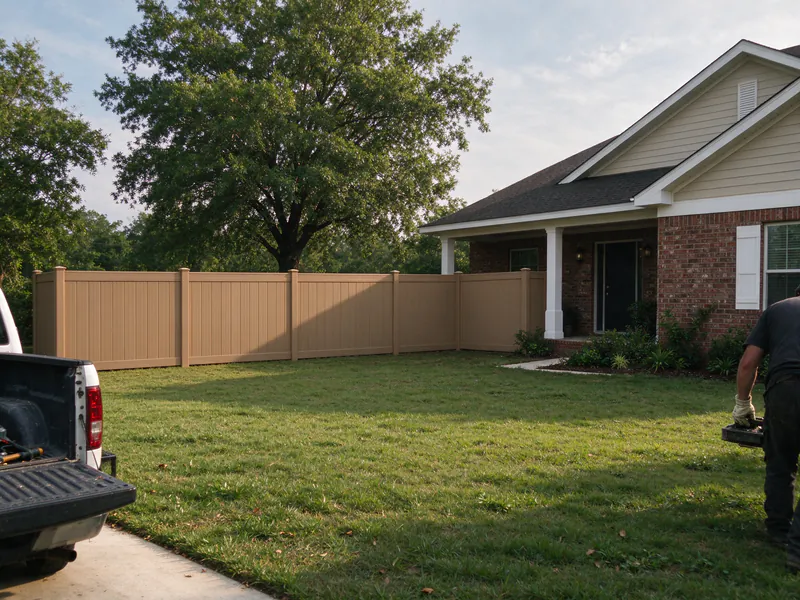
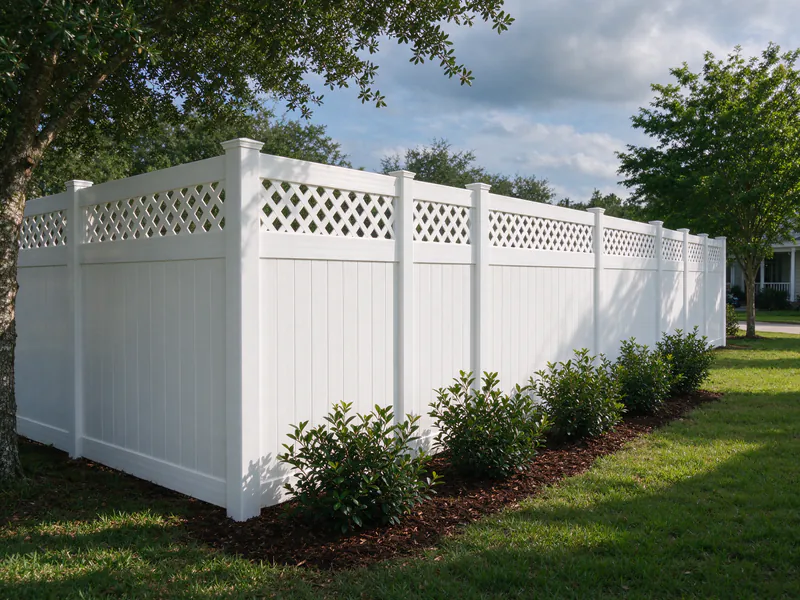
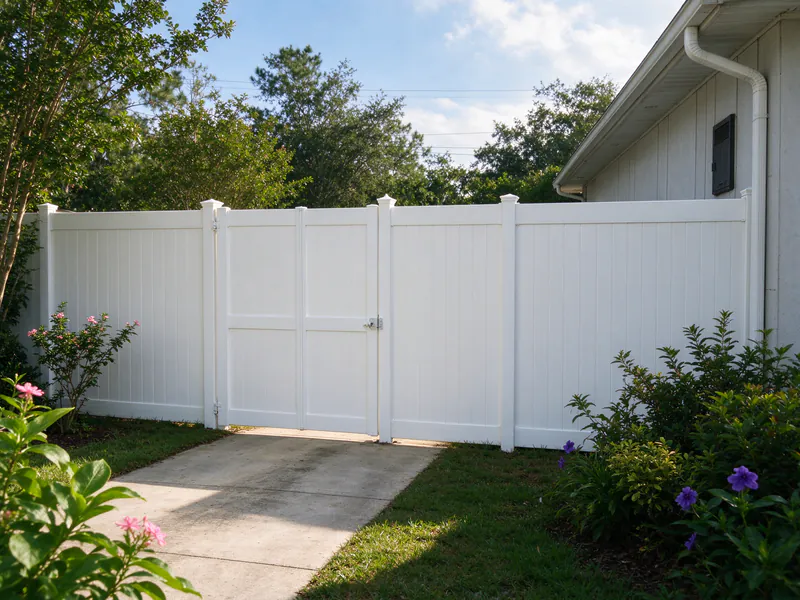
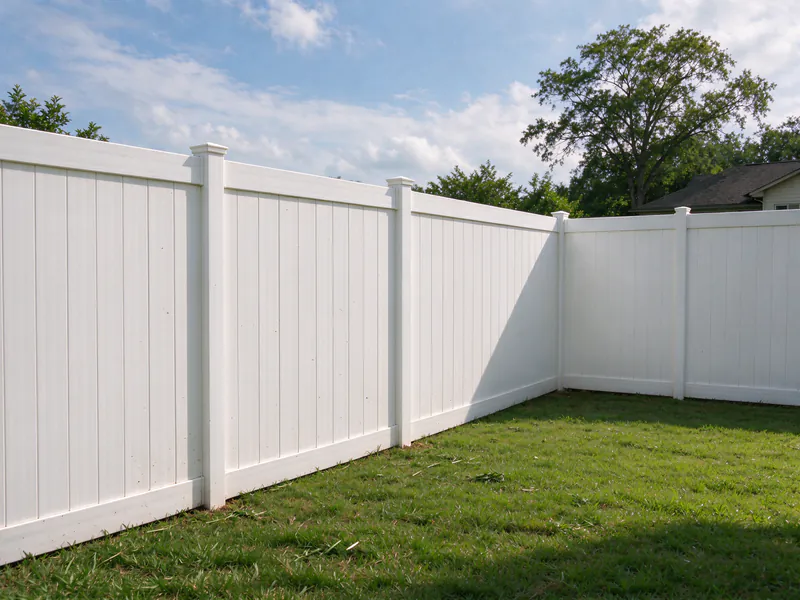
Vinyl fence installation around Hammond is a trade between two climates: summer heat that makes PVC move, and wet ground that tests every post. Palisades Hammond Fence installs vinyl privacy, semi-privacy and picket fences across Hammond, Tangipahoa Parish and the nearby towns of St. Tammany and Livingston, and plans each one around its panels, its gate posts and the soil. Installation is carried out by licensed and insured fence contractors.
Vinyl appeals here for good reasons. It doesn’t rot at grade, termites ignore it, and it never needs stain. It still has failure modes of its own, and this page explains them. If you are still choosing a material, the wood vs vinyl fence guide compares the two in depth.
What happens on the first visit
A vinyl fence is laid out in modules. Panels come in fixed widths, commonly 6 or 8 ft, so the walk of the line measures the run, marks corners and gate openings, and then fits the panel spacing to the yard. A run that ends a few inches past a full panel means a cut panel somewhere, and the best place for it is chosen on site rather than discovered on install day.
Grade gets close attention too. Most vinyl privacy panels can’t rack to follow a slope the way a wood fence can, so each panel steps down level, leaving a triangular gap under the low end that is filled or planted. The walk also notes where water stands after rain and whether the line crosses a drainage servitude, which the drainage easement guide covers.
After the visit come the permit drawing from your survey or parcel map and the Louisiana 811 locate. State law treats every augered post hole as excavation and requires notice at least 48 and no more than 120 hours ahead, weekends and holidays excluded.
How a vinyl fence is put together
A vinyl fence is a kit of hollow PVC profiles that lock together, and the strength lives in a few hidden parts.
- Posts. Hollow square sleeves, typically 5 in for privacy runs, set in concrete. Gate, end and corner posts carry an aluminum or steel insert, because those posts take loads the fence can’t share along the line.
- Rails. Slide into routed holes in the posts. The bottom rail carries an aluminum stiffener so it doesn’t bow under the weight of the pickets.
- Pickets or boards. Tongue-and-groove boards on privacy panels, spaced pickets on picket styles, held in a U-channel or locked into the rails.
- Caps. Close the post tops against water and debris.
The material standard is ASTM F964, which covers the rigid PVC profiles used for fencing, including their impact and weathering properties. Thin-walled profiles and unreinforced rails save money at purchase and cost it later, so the estimate names the post size, wall and stiffeners.
Heat, wind and wet ground: where vinyl fails here
Heat and movement
NOAA’s 1991-2020 normals for the Hammond station average 86 days a year at or above 90°F. PVC expands as it warms, and a sun-facing panel runs hotter than the air. Rails that slide freely in their routed holes absorb that growth; rails screwed tight at both ends bow or pop out instead. Darker colors and textured wood-look finishes absorb more heat, so a pale color is the forgiving choice on a long south- or west-facing run.
Wind on a solid face
A 6 ft solid vinyl panel 8 ft wide presents 48 square feet to a storm, and vinyl panels are lighter and more flexible than wood. In strong gusts the face flexes, the rails work loose in their routing and panels can pop out whole. Homeowners report new privacy panels flexing and anchors loosening in the first windstorm. Closer post spacing, stiffened rails, and semi-privacy or lattice-top styles reduce that load, and the wind-resistant fence page compares those details.
Posts in wet soil
Vinyl does not rot, but its footing is still in the ground. USDA soil survey data for Hammond maps mostly poorly drained silt loams, with the seasonal high water table as shallow as about 5 inches. A post that rotates in soft soil leans the whole panel with it, which is why depth, concrete and drainage at the base are planned per address. The wet clay post guide explains the options.
Plan the panel layout before the order
Send the address, length, height and style. Panel spacing, gate posts and footings come first.
Gates on a vinyl fence
Most failing vinyl fences start at the gate. A vinyl gate leaf hangs from a hollow post, and without a metal insert that post bends at the ground line until the latch no longer meets. Homeowners report leaning vinyl gates on fences whose panels are otherwise fine, which points to the hinge post rather than the gate.
A durable vinyl gate has an aluminum or steel frame inside the leaf, a reinforced hinge post set deeper than the line posts, self-closing hinges sized for the leaf weight and a latch post that is just as stiff. Openings wider than about 5 ft are better as double gates with a drop rod. The gate installation page covers hardware and widths, and gate repair covers the fix when an existing leaf drops.
Hammond’s rules for a vinyl fence
Inside city limits a fence permit comes first, and the City approves the location from a survey or parcel map (UDC 4.1.8). The residential permit fee is $10, doubled if work starts before the permit.
Behind the front of the house, Hammond’s code names vinyl among the solid fences allowed up to 8 ft, with height measured from the lower side. The front yard is different. Front fences are capped at 4 ft, and the materials list names wood, metal other than chain link, decorative or simulated wrought iron and masonry. Vinyl is not on it, so a vinyl picket fence in front is confirmed with the Building Department before it is drawn.
On a corner lot, nothing may stand more than 3 ft high within 30 ft of the street intersection.
Covington and Mandeville set their own heights and front-yard rules, covered on the Covington and Mandeville pages, and anything beyond those is confirmed per address. The fence permit guide has the full process.
Upkeep: what vinyl needs and what it doesn’t
Vinyl skips the staining cycle, which is the main reason people choose it. It still needs washing, since mildew and algae grow on the shaded face in this humidity. A string trimmer or mower that strikes the bottom rail can crack it, and so can a hard hit in cold weather. Repairs depend on the profile still being sold, so it is worth keeping a spare panel or two from the original order. The fence repair page covers panel and rail replacement.
What a vinyl fence costs around Hammond
A typical Hammond-area range for a 6 ft vinyl privacy fence, installed, is about $20 to $60 per linear foot. Long straight runs on flat ground with standard white panels sit low. Textured or colored profiles, decorative caps and trim, stepped panels on slopes, extra gates and wet ground push toward the top. Walk gates typically add $150 to $600 each, and taking out an old fence adds $2 to $8 per foot under fence replacement. These are budgeting ranges, not quotes.
The vinyl fence cost guide breaks the range down, and the fence cost estimator turns your length and options into a number without a phone call.