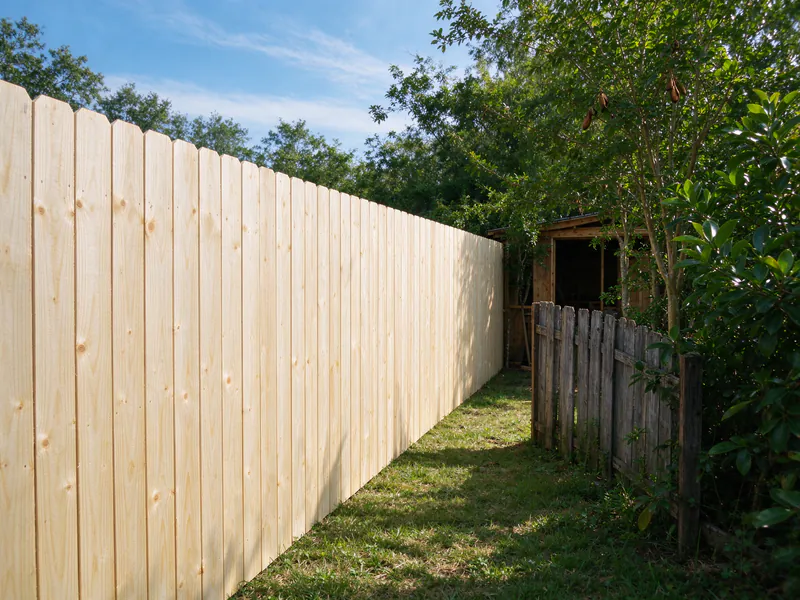
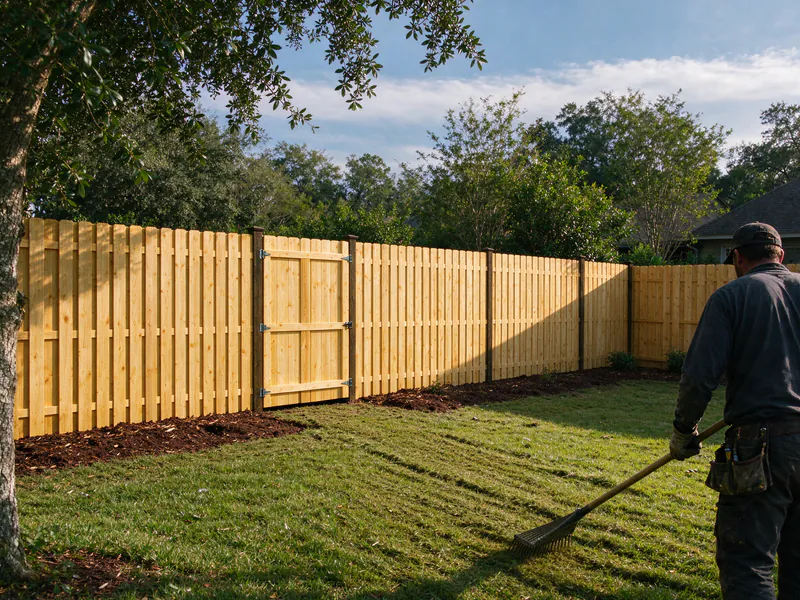
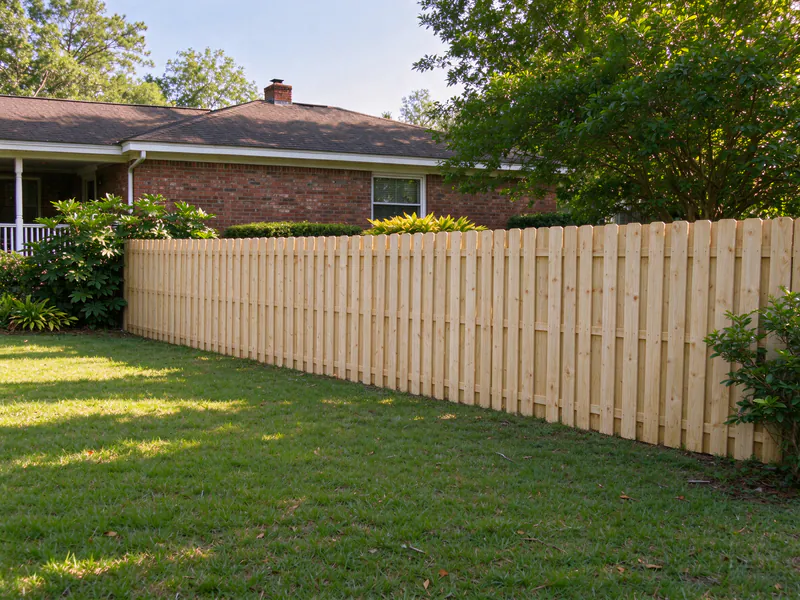
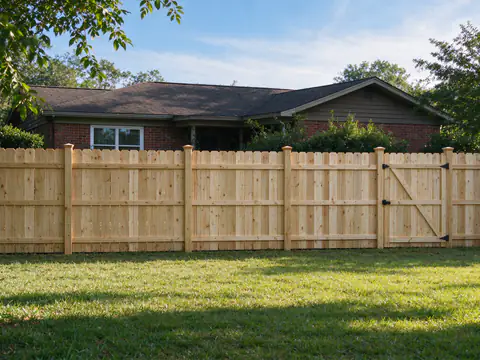
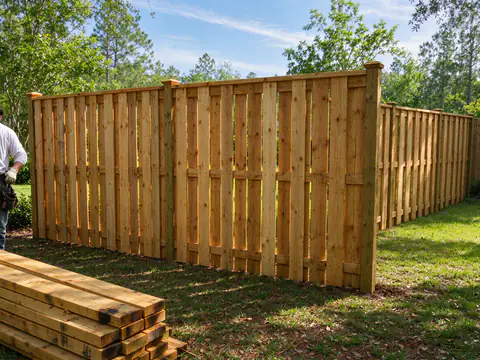
Replacement is two jobs priced together: taking the old fence out, and building a new one that fixes what made the old one fail. Palisades Hammond Fence replaces wood, vinyl, chain link and metal fences across Hammond and the surrounding towns of Tangipahoa, St. Tammany and Livingston parishes, from a single side run to the full perimeter of a lot. Installation is carried out by licensed and insured fence contractors.
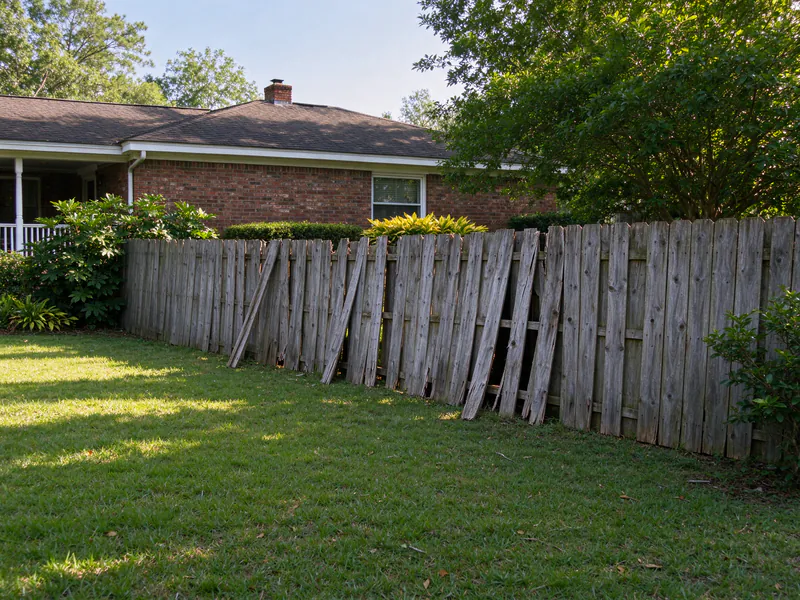
Most replacements come down to the posts. A fence that leans along its whole length, or whose posts are soft at the ground line from end to end, has run out of structure even if many boards look fine. The sections below cover how to tell, what tear-out involves, how the boundary is protected, and what the new fence should do differently.
When replacement makes more sense than repair
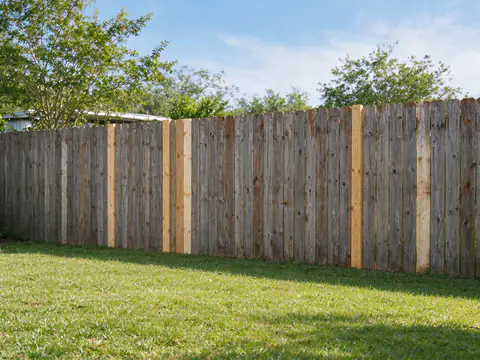
A repair fixes a part; a replacement fixes a system. The useful test is whether the failure is isolated or spread through the line. Posts set on the same day, in the same soil, with the same treatment, age together. When two or three have rotted through at grade, the rest are usually not far behind, and replacing posts one at a time just moves the next failure down the run.
Signs that point to replacement:
- Most posts move when pushed at shoulder height, or feel soft when probed just below grade.
- Rails are rotted where they meet the posts all along the run, not in one bay.
- Boards are split, cupped or too far gone to hold new fasteners.
- The fence is too tall or the wrong material for its spot under the current code.
- A survey shows the fence off the property line or inside a servitude.
If only a post or a section has failed, fence repair or fence post replacement is the smaller job. The repair or replace guide works through the decision with costs in view, and the fence lifespan guide explains why posts tend to fail close together.
What tear-out involves
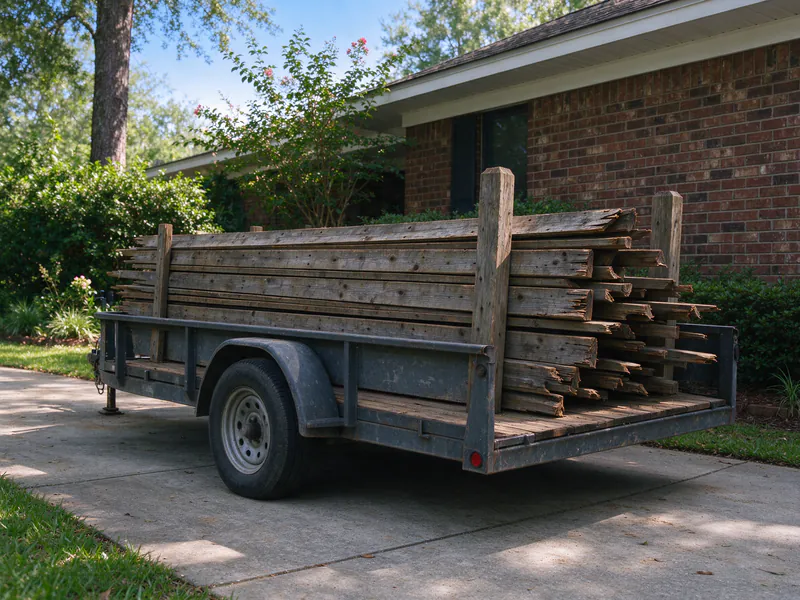
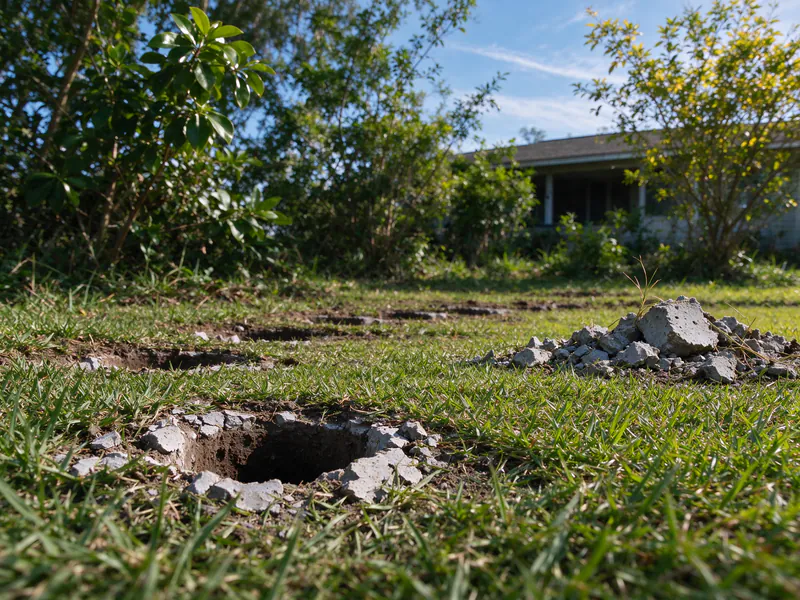
Taking down the boards and rails is the quick part. Posts are the slow part, because most are set in concrete, and a concrete collar that has been in wet ground for years does not let go easily. Each footing is either pulled out whole, broken up in the hole, or left in place with the new post set to one side. Which one depends on the footing’s size, how close it sits to a slab or a neighbor’s fence, and where the new layout needs a post.
Old chain link comes apart differently. The fabric is cut from its ties and rolled, the top rail is unbolted, and the steel posts are pulled or cut. Where the posts are set in concrete, the same footing choice applies.
Everything that comes out is loaded and hauled away for disposal when tear-out is part of the quote, and it is priced as its own line so you can see it. Holes the new fence does not reuse are backfilled and tamped so they do not become soft spots in the yard. Treated wood is not burned.
Price the removal and the new fence together
Send the length and material of the old fence and what you want built. Tear-out and haul-away show as their own line.
Boundary markers and the line under the old fence
The old fence is not the property line, and tearing it out is the moment to confirm where the line actually runs. Fences drift: an earlier owner may have set one a foot inside to avoid a ditch, or a foot over without knowing. Since the City of Hammond approves a new fence’s location from a survey or parcel map, the replacement is built to that document, not to the old post holes.
Boundary markers need protecting during tear-out. Iron pins and other markers often sit near fence corners, where a post puller or a backhoe bucket can disturb them. Louisiana Civil Code article 791 makes anyone who removes boundary markers without court authority liable for it, and fixing a boundary out of court is a shared cost under article 790. Markers are located before the first post comes out and left untouched.
A fence on the boundary is presumed common to both neighbors under article 685. That affects who shares the cost of a replacement, and it means a common fence should not come down without the neighbor knowing. Building the new fence just inside your own line keeps it yours to maintain. The Louisiana fence laws guide explains the options.
What the new fence should change
Rebuilding the same fence the same way buys the same failure on roughly the same schedule. The tear-out is useful evidence: the broken posts show whether the wood rotted at grade, snapped in wind or was eaten by termites, and the old footings show how deep and how wide they were.
| What failed | What the new fence changes |
|---|---|
| Posts rotted at grade | Ground-contact treated or galvanized steel posts; footings with gravel at the base and concrete crowned above grade |
| Run blew over in a storm | Heavier, deeper posts, closer spacing, or a semi-open face on exposed runs |
| Gate sagged | A heavier, deeper hinge post and a braced or steel gate frame |
| Fasteners rusted out | Hot-dip galvanized or stainless fasteners and hardware |
| Boards rotted at the bottom | A gap between boards and ground so the wood can dry |
| Fence sat in standing water | A line moved off low spots or ditch banks where the survey allows |
Material can change too. A pine fence can come back as cedar boards on steel posts, as vinyl, or as a wind-resistant design with a semi-open face. The why fences fail guide explains each failure in more depth.
Replacing old chain link
Chain link is often the fence being replaced, especially across a front yard. Hammond’s code does not allow chain link or barbed wire in front of the house, and limits front-yard fences to 4 ft of wood, metal, wrought iron or masonry. An old front-yard chain link run is usually replaced with aluminum or a picket fence, while side and back runs can come back as chain link, wood privacy or vinyl. In the Hyer-Cate overlay, open wire and chain link are likewise barred beyond the front building line.
Permits and the locate for the new fence
Hammond’s code requires a fence permit before a fence is placed, and a replacement places a new one, so the new fence goes through the permit like any other. The residential fee is $10 and doubles if work starts first. Covington’s permit asks for a drawing of existing and proposed fences, and the fence permit guide covers the other towns. Louisiana 811 is notified 48 to 120 hours before new holes are dug, not counting weekends and holidays.
What fence replacement costs
Removal and the new fence are priced separately. Typical Hammond-area tear-out and haul-away runs about $2 to $8 per linear foot; concrete footings, long runs of chain link and tight access push it up. The new fence follows the installation ranges: about $15 to $45 per foot for 6 ft pine privacy, $22 to $55 for cedar privacy, $20 to $60 for vinyl privacy and $10 to $30 for residential chain link, plus about $150 to $600 per walk gate. These are budgeting ranges, not quotes.
The fence installation cost guide shows what moves a price within those ranges, and the fence cost estimator gives a range for a rebuild of your length. If a storm brought the old fence down, the storm-damaged fence repair page covers documentation for a claim before anything is hauled off.