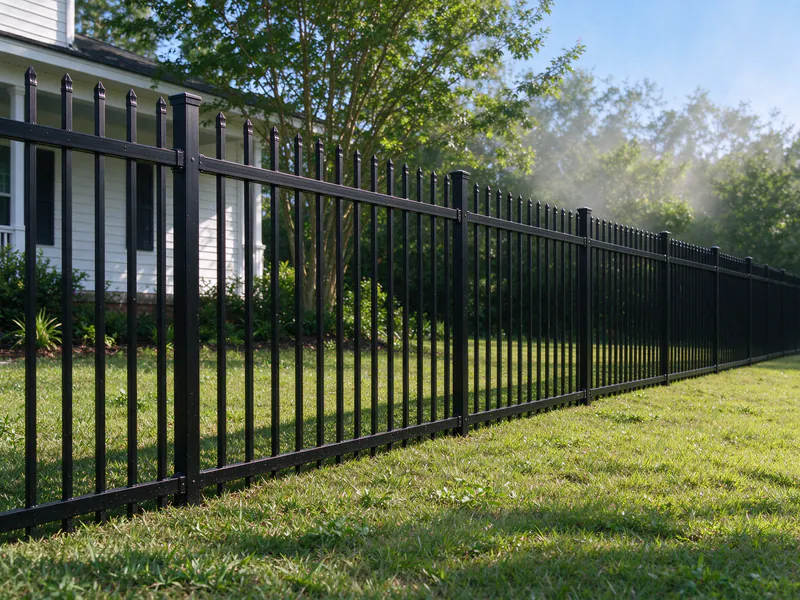
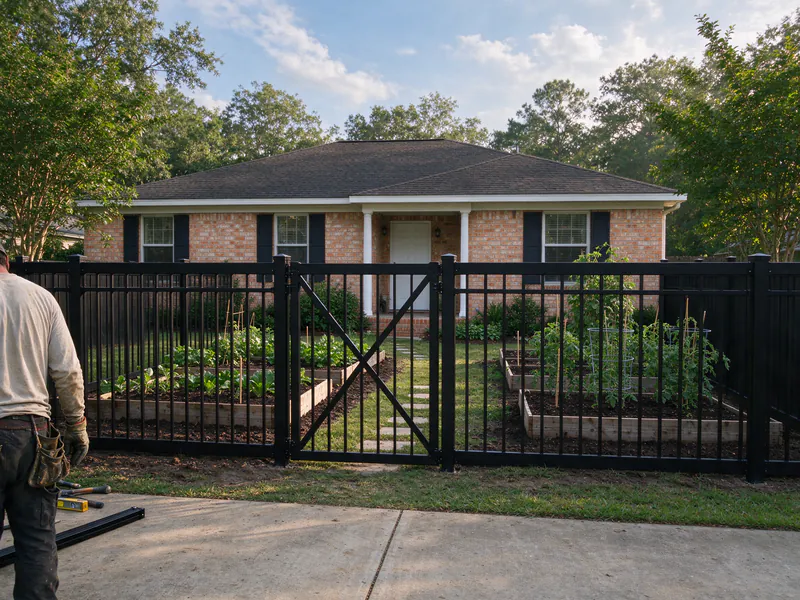
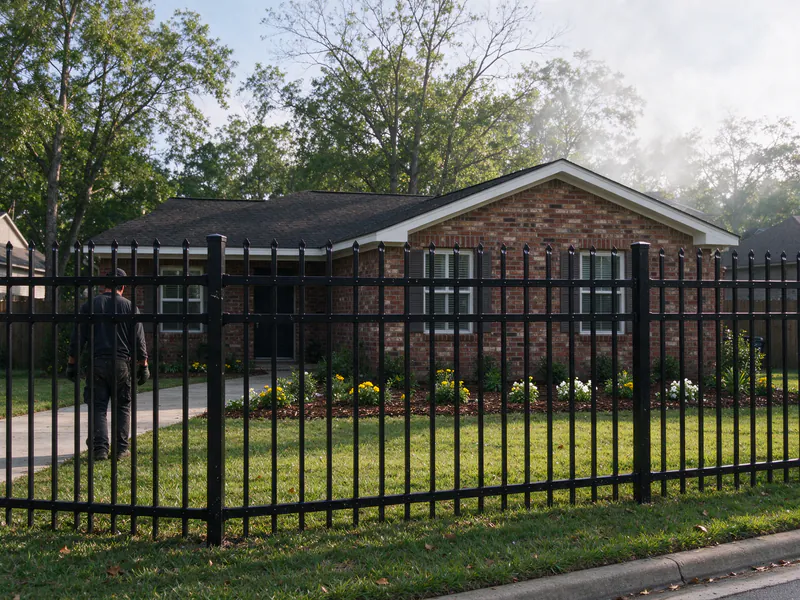
Aluminum fence installation is the usual answer around Hammond when someone wants the look of iron without the rust. Palisades Hammond Fence installs powder-coated ornamental aluminum fences across Hammond and nearby towns in Tangipahoa, St. Tammany and Livingston parishes, for front yards, pool enclosures, dog runs and decorative borders. Installation is carried out by licensed and insured fence contractors.
An aluminum fence is open by design: it marks a line, contains a dog or forms a barrier without blocking the view or the breeze. This page explains how it is built, why its finish and fasteners matter in this humidity, how it compares with steel, and which local rules shape where it goes.
What happens on the first visit
The walk starts with purpose, because it sets the panel. A decorative front-yard border, a dog fence and a pool barrier all look alike from the street but need different picket spacing, heights and gate hardware. The run is measured, gate openings and corners are marked, and the grade along the line is checked panel by panel to decide where panels rack and where they step.
The visit also notes whether the line sits in front of the house, inside the Hyer-Cate overlay or the Historic District, or near a corner intersection, since each brings its own limit. Then come the permit drawing from your survey or parcel map and the Louisiana 811 locate request, filed at least 48 and no more than 120 hours before digging.
How an aluminum fence is built
An ornamental aluminum fence is a system of extruded parts made to fit together. The fit is what makes it last.
- Posts. Square aluminum tubes, commonly 2 in for line posts and heavier for gates, set in concrete. Rails slot into routed holes or mount on brackets.
- Rails and pickets. Two or three rails per panel with pickets passed through them and fastened, often with hidden screws. Grades from residential to industrial differ in picket size and wall thickness, which sets how well the fence resists bending.
- Finish. A powder coat baked over a chemical pretreatment, usually black, bronze or white.
- Hardware. Hinges, latches and screws in stainless steel or coated metal compatible with aluminum.
The posts, rails and pickets are extrusions, typically made to ASTM B221 from alloys such as 6063 or 6005. Asking which grade, alloy and wall thickness a quote uses is a fair way to compare two aluminum fences that look the same in a photo.
Protective coatings and corrosion
Aluminum reacts with air to form a thin oxide film that seals the metal, so it doesn’t rust through like steel. That is why aluminum suits a climate with about 64 inches of rain a year, per NOAA’s normals for the Hammond station, and long, humid summers.
The weak points are the finish and the joints. Powder coat protects the surface and gives the color, and it lasts only as long as the pretreatment under it holds. AAMA 2604 is one of the published performance standards for organic coatings on aluminum, testing weathering, color retention and adhesion. A coating that was applied over a poorly cleaned surface can blister or let corrosion creep outward from a scratch.
Dissimilar metals
Corrosion also starts where aluminum touches a different metal in the presence of moisture. Plain steel screws, steel hinges without a compatible coating and copper-based treated lumber all set up that reaction, and the aluminum is the side that loses. Stainless fasteners, hardware made for the system and no direct contact with treated wood keep the fence from corroding at its joints, which is where failure shows first.
Tell us what the fence is for
Front-yard border, dog fence or pool barrier: the purpose sets picket spacing, height and gates.
Aluminum or steel
Aluminum and ornamental steel look nearly identical from the street, and the difference shows up over years and under load. Aluminum is lighter, won’t rust and costs less. Steel is heavier, far more rigid and resists impact and climbing, but it rusts wherever its galvanizing and paint are broken, which in this humidity means welds, cut ends and scratches need watching.
For most homes, aluminum is the practical choice: front borders, pool barriers and pet fences. Steel earns its weight on security fences, tall drive gates and custom designs. The wrought iron fence page covers steel and custom ornamental work, and the comparison table on this page sets the two side by side.
Decorative fences, front yards and districts
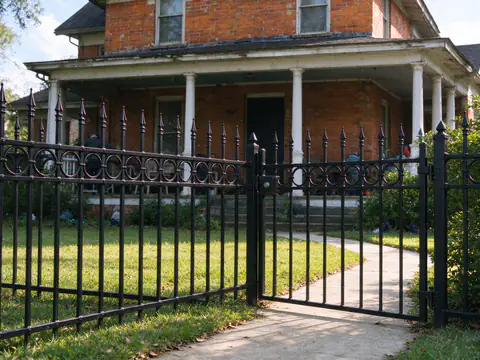
Ornamental aluminum is one of the few fences Hammond allows in a front yard. The development code permits front-yard fences of wood, metal other than chain link, decorative or simulated wrought iron, or masonry, up to 4 ft high, and aluminum fits within that list. Behind the front of the house the 4 ft cap no longer applies, and the allowed height for the lot is confirmed on the permit. Within 30 ft of a street intersection, nothing above 3 ft is allowed.
In the Historic District, any fence fronting a street or alley goes before the Historic District Commission, and the Hyer-Cate overlay keeps the same 4 ft front limit. Mandeville’s rules allow decorative wrought iron in front setbacks up to 5.5 ft, more than Hammond; the Mandeville page has the details, and the exact limit is confirmed per address. The fence permit guide covers the application.
Wind, storms and impacts
An open picket fence lets wind pass, so aluminum carries far less storm load than a solid privacy fence of the same height. FEMA has declared major disasters covering Tangipahoa Parish for storms from Katrina in 2005 to Francine in 2024, and in those events flying debris and falling limbs are the bigger threat to an open fence.
Posts still stand in wet ground, so footings follow the wet clay post guide. A bent picket or panel can be replaced section by section when the style is still available, as the fence repair page explains.
Gates and pools
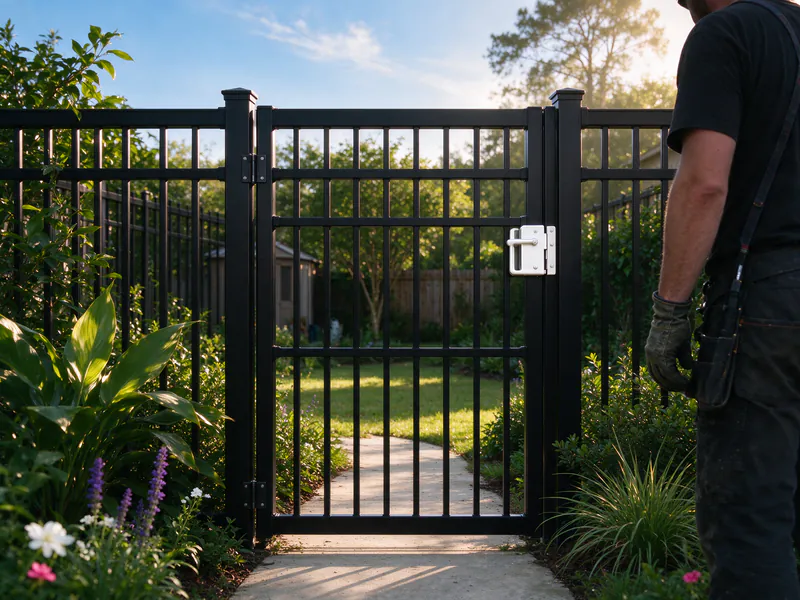
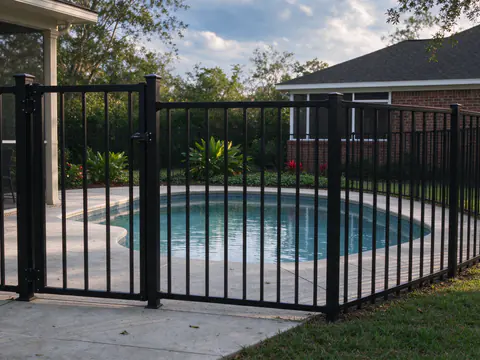
Aluminum gates are light, which is easy on hinge posts, but a wide leaf can flex. Walk gates hang on heavier posts with self-closing hinges where needed, and wide openings get double leaves or a stiffer frame. For pool enclosures, aluminum is the common barrier material, with picket spacing, height and gate hardware set to the barrier rule confirmed for your address; see pool fence installation. The gate installation page covers hardware.
What an aluminum fence costs around Hammond
A typical Hammond-area range for an ornamental aluminum fence, installed, is about $25 to $55 per linear foot, and aluminum pool barriers fall in the same band. Standard black panels on flat ground sit low. Taller panels, heavier commercial grades, decorative finials and rings, racking on slopes and more gates push toward the top. Walk gates typically add $150 to $600 each. These are budgeting ranges, not quotes, and the pool fence requirements guide covers what a barrier adds.
The aluminum fence cost guide breaks the range down, and the fence cost estimator gives a number from your own length and options.