Most fence repairs are quick to do and slow to diagnose. Palisades Hammond Fence repairs wood, vinyl, chain link, aluminum and steel fences around Hammond and the nearby towns of Tangipahoa, St. Tammany and Livingston parishes, and every repair starts by asking whether one part failed or the whole fence is wearing out. Installation is carried out by licensed and insured fence contractors, and repairs follow the same arrangement.
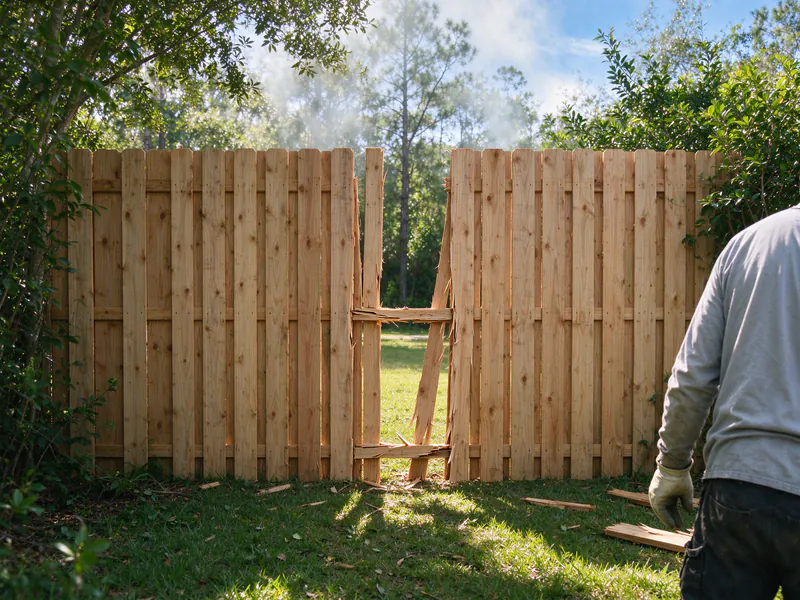
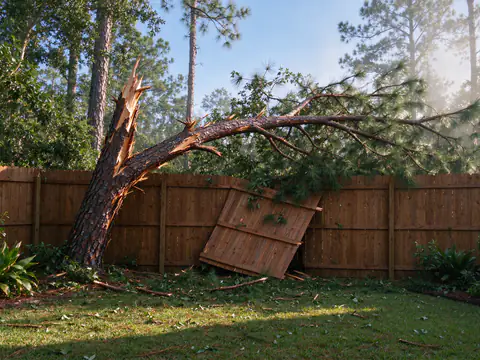
That first question decides everything after it. A broken board, a kicked-out panel or a rail snapped by a falling limb is a component failure, and fixing the part fixes the fence. A run where most posts move, most rail ends are soft or most panels are cracking is a system failure, and patching it one piece at a time spends money on a fence that is still on its way out.
Component failure or system failure
The way to tell the two apart is to look past the broken part to its neighbors. Every post, rail and board on a run was installed at the same time, in the same soil, with the same treatment and fasteners. If the part that failed did so because of an impact, a falling tree or a single wet spot, its neighbors are usually sound. If it failed from age, its neighbors are usually close behind.
That is why a repair visit walks the whole line, not only the section that is down. Each post is pushed at shoulder height and checked at grade, rail ends are checked where they meet the posts, and hardware is checked for rust. The repair or replace guide covers the decision in more depth, and the fence assessment tool helps sort what you are seeing first.
Fixing boards, panels and fabric
The face of a fence takes the knocks: kicked boards, mower strikes, branches and dogs. How it is repaired depends on the material.
Wood boards and pickets
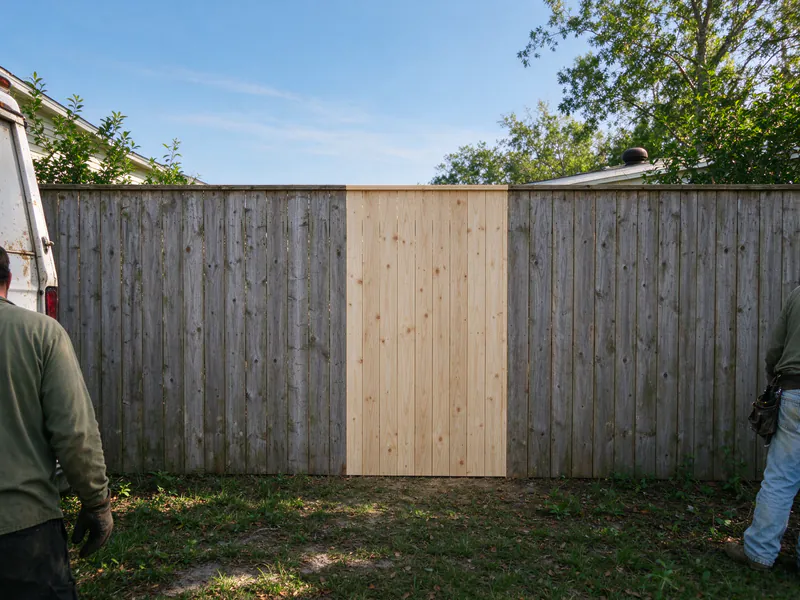
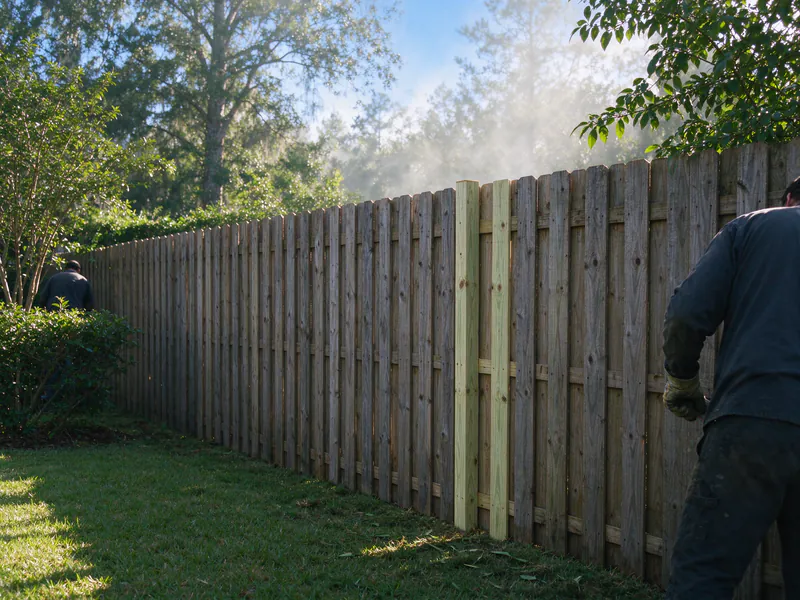
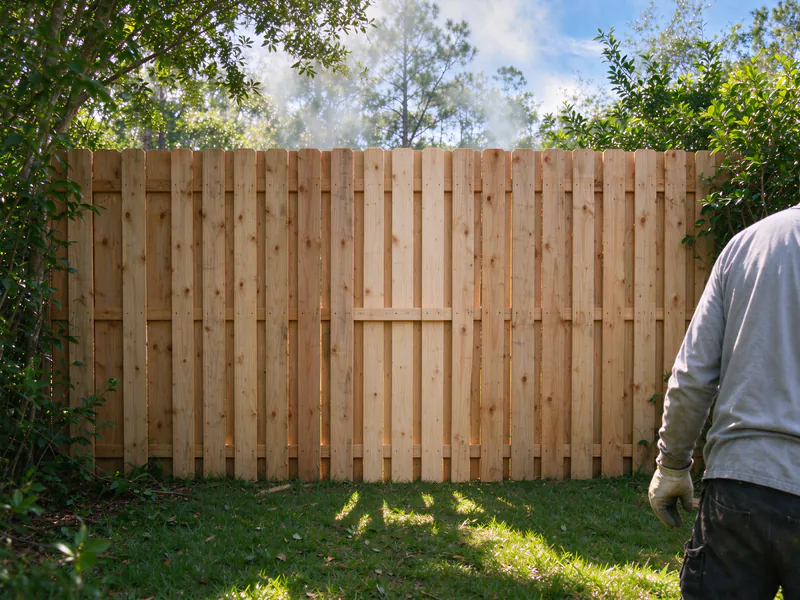
Broken, split or loose boards are replaced individually, matched in width, profile, length and top cut. Pressure-treated pine is the easiest fence to repair one board at a time, which is part of why it is the local default.
New boards are fastened with hot-dip galvanized or stainless nails or screws, because the copper in modern treatments corrodes plain steel. Boards that have rotted at the bottom are a sign the face was touching soil or mulch, so the repair keeps a gap of an inch or two above the ground.
Vinyl panels and rails
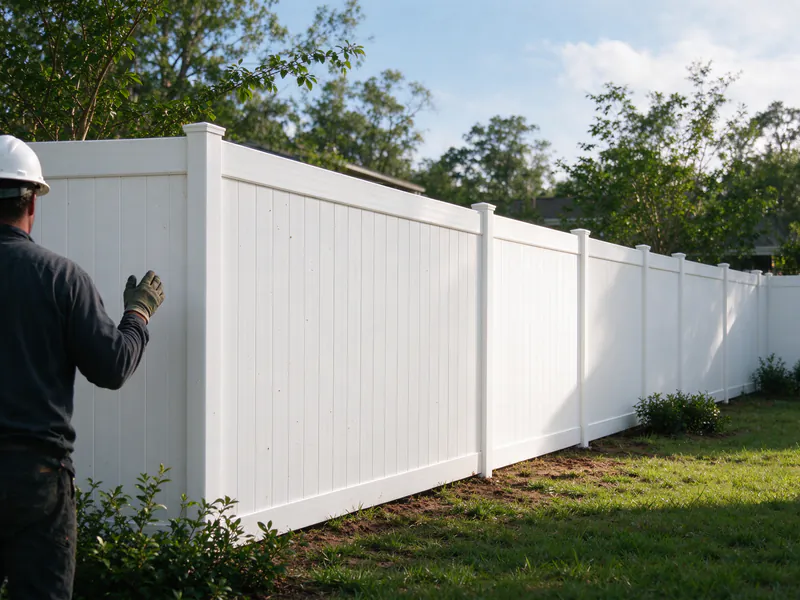
Vinyl rails lock into routed holes in the posts. Wind can flex a panel far enough to pull a rail end free, and impacts crack rails and pickets, especially in older vinyl that has been in the sun for years. A panel that popped out is reseated and locked, while cracked parts are replaced from the same system. Vinyl profiles vary by maker, so an older fence can be hard to match exactly; the vinyl fence page covers the systems used here.
Chain link fabric and framework
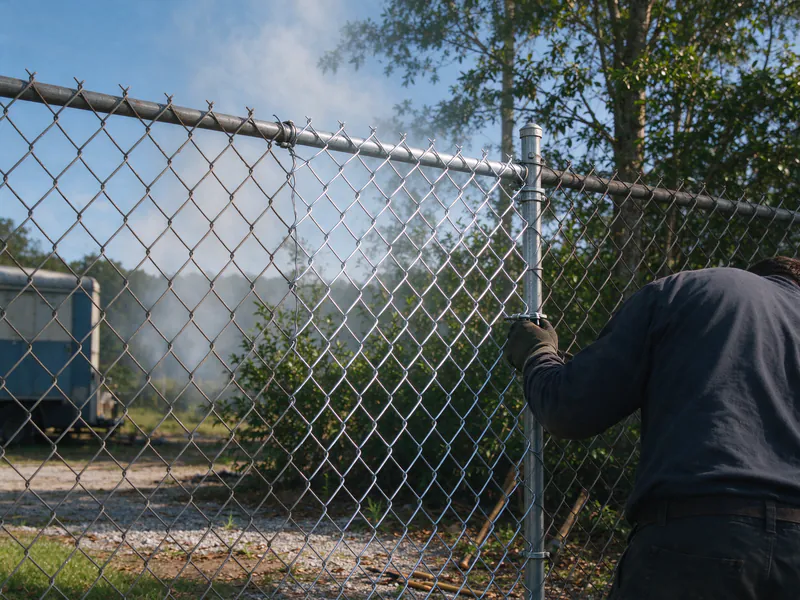
Sagging chain link is a tension problem. The fabric is stretched between terminal posts and held by tension bars and bands, and when one of those fails, or the top rail bends, the whole bay loosens.
The repair re-stretches the fabric from a terminal post, replaces broken bands, ties and bent rail, and splices in new fabric where a section is torn. Rust at the base of the posts is checked at the same time, since zinc wears off fastest where steel stays wet. See chain link fences for how the framework is built.
Aluminum and steel panels
Ornamental panels usually fail at their brackets and fasteners rather than the pickets. Bent pickets on aluminum can sometimes be replaced, and steel is repaired by cutting out and welding new sections, then coating the bare metal so rust does not start at the weld. The wrought iron fence page covers coatings.
Rails and fasteners
Rails fail in a predictable place: the end, where the rail meets the post. Water runs down the post face and sits in that joint, end grain soaks it up, and the fasteners lose their grip as the wood around them softens. A rail that sags or drops at one post is replaced, or carried on a galvanized rail bracket where the post face is sound but the old nail holes are not.
Rusted fasteners are the other common failure. Plain steel nails in treated pine can rust through, and boards then work loose in wind. Re-fastening a run with coated or stainless screws is a real repair, and often the cheapest one that makes a measurable difference.
Send photos of the damage and the ground line
Close-ups of the broken part, plus each nearby post where it meets the soil, are usually enough to scope a repair.
When the repair moves below ground
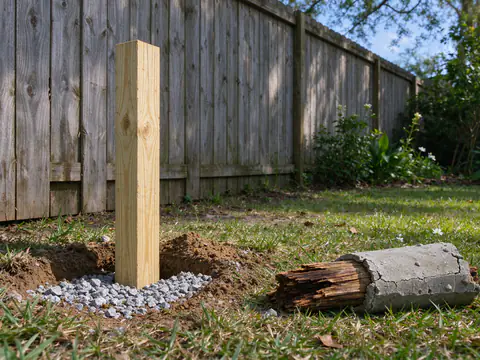
A post that leans, wobbles or has snapped at grade is the one repair that changes the job. It means digging, and every new hole needs a Louisiana 811 notice 48 to 120 hours ahead, not counting weekends and holidays, because state law treats any dug or augered hole as excavation. Around Hammond, posts mostly fail at the ground line: USDA maps the soils as mostly poorly drained, and NOAA puts about 64 inches of rain a year on the city, so wood at grade stays wet for long stretches.
One or two failed posts on an otherwise solid line are a fence post replacement. Several in a row, or posts snapping close together, point back to the system question above. The post rot and termite guide explains how to tell rot from termite damage.
Fixing the cause, not only the part
A repair that leaves the cause in place will fail again. The common causes along a fence line are easy to miss:
- Soil or mulch against the boards. A raised bed, a planter or a mulch ring keeps the bottom of the fence wet; the soil is pulled back or the boards are cut clear.
- Leaves and debris trapped behind the fence. Wet leaves packed between a fence and a shed or hedge rot the boards they touch.
- A fence damming runoff. Boards that run to the ground can pond water on the uphill side; trimming the bottoms to leave a gap lets it pass.
- Vines and overhanging limbs. Vines hold moisture and add weight in wind. Under Civil Code article 688, a landowner may ask a neighbor to trim branches that extend over the line and interfere, at the neighbor’s expense.
- Sprinklers aimed at the fence. They keep the boards and post bases wet every day.
Shared fences and neighbors
A fence on the property line is presumed common to both owners under Louisiana Civil Code article 685. Where both lots are enclosed, one owner can compel the other to contribute to repairing a common fence; where they are not, it falls to local ordinances. In practice, a short written agreement before work starts, covering the split and access to the neighbor’s side, prevents most disputes. The Louisiana fence laws guide has more on ownership.
What fence repair costs
Repairs are priced by scope rather than per foot, so no single range fits them. The drivers are the material and whether replacement parts still match, whether posts are involved and how their footings come out, how much of the line needs work, and access to both sides of the fence. A service minimum can apply to a small job, which is why a list of small repairs usually costs less done in one visit than in several.
If a storm caused the damage, the storm-damaged fence repair page covers documenting it for a claim first.
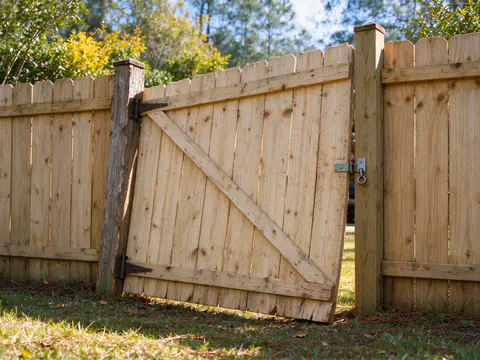
Labor here costs less than the national figure: Louisiana fence erectors earn a mean $19.92 an hour against $24.29 nationally (BLS OEWS). A wage is not a billing rate, since a repair price also carries travel, materials, insurance and overhead. The fence repair cost guide goes through the drivers, and the gate repair page covers gates that sag or will not latch.