One failed post is the most common fence repair there is, and the one most worth catching early. Palisades Hammond Fence replaces rotted, leaning and snapped fence posts around Hammond and the nearby towns of Tangipahoa, St. Tammany and Livingston parishes, on wood, vinyl, chain link and metal fences. Installation is carried out by licensed and insured fence contractors, and post work follows the same arrangement.
A post holds up the rails and boards of two bays. When it fails, its neighbors take the load and the strain of the leaning section, so a single bad post left for a season tends to become three. This page covers how to spot a failing post, why posts fail at grade here, how old concrete comes out and how the new post is matched and set.
Signs a post needs replacing
A post that needs replacing usually shows it at the ground line before anywhere else.
- It moves. Pushed at shoulder height, the post rocks in its footing or flexes at grade.
- It leans. One post is out of plumb while the rest of the run stands straight.
- It snapped. The post broke at or just below the soil, often inside its concrete collar.
- It sounds hollow. Tapping at grade gives a dull, empty note, or a screwdriver sinks in easily.
- It shows mud tubes. Pencil-width soil tubes climb the post face from the ground.
- A ring of open soil. A gap around the footing means it has rotated in the ground.
A lean on its own does not prove rot. A sound post in a footing that rotated in soft ground leans too, and it can sometimes be reset rather than replaced. The leaning fence guide sorts the causes, and the fence assessment tool helps you check your own line.
Why posts rot at the ground line here
Rot needs water, warmth and air together, and the band a few inches above and below grade has all three. Below that band the soil is wetter but has less air; above it the wood dries between rains.
Around Hammond the band stays wet for long stretches: USDA maps the soils as mostly poorly drained silt loams with a seasonal water table near 9 inches at the median point sampled, and NOAA’s normals put about 64 inches of rain and 86 days at or above 90°F on the city each year.
Concrete can make it worse. A collar that ends at the grass, or one that has pulled away from the post as the wood shrank, holds water against the post in exactly that band. A post can look solid above ground while its core at grade is gone, which is why so many break inside their footing. The wet clay post guide goes deeper on footings.
Termites in fence posts
Subterranean termites live in the soil and feed on wood that touches it, so a fence post is easy for them to reach. They hollow posts along the grain, often leaving the outer shell intact and packing the galleries with soil, and they travel up the face in mud tubes. Native subterranean termites and the Formosan species both attack wood this way; whether either is active at a given address takes an inspection to know.
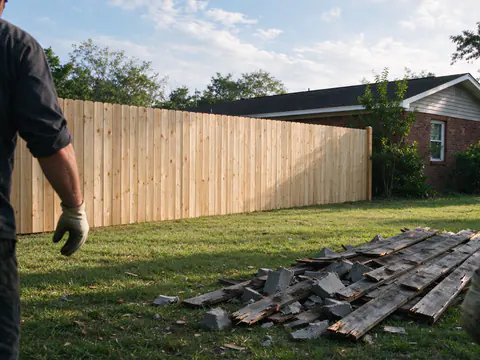
Ground-contact treated posts resist termites, but the treatment does not reach the core of every board, and each field cut exposes untreated wood. Cut ends get a brushed-on preservative and are kept above ground where possible. Mulch heaped against posts, scrap lumber left along the line and untreated landscape timbers all give termites an easy start. The post rot and termite guide has photos of both kinds of damage.
Catch the failed post before it spreads
Send a photo of the post at the ground line and the posts on either side. That is usually enough to scope the job.
Getting the old post and its concrete out
Before any digging, Louisiana 811 is notified at least 48 and no more than 120 hours ahead, not counting weekends and holidays. State law counts augering and digging by hand or machine as excavation; only hand probing is exempt. A replacement hole is still a hole, and service lines often run along property lines where fences sit.
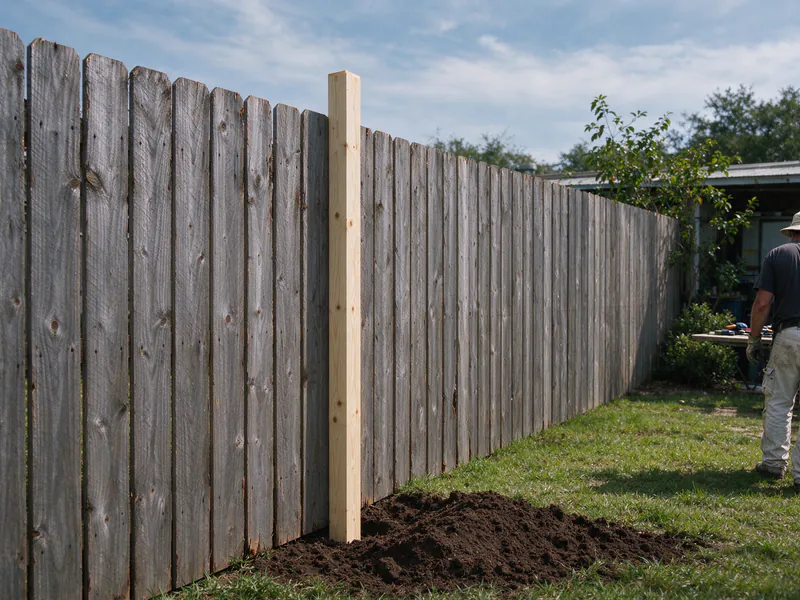
The rails are supported first, so the bays on either side do not rack or pull the next posts over while the failed one is out.
Then the old footing is dealt with in one of four ways: pulled out whole with a post jack, broken up in the hole, bypassed by setting the new post beside it, or, where the post snapped inside a sound collar, drilled or chiseled out so the new post can drop into the same hole. Homeowners report that collars tied into a buried wall or a slab are the hardest to remove, which is where setting beside the old footing earns its place.
Setting the new post
The new post is set for the load it carries. Wood posts carry a ground-contact treatment rating, AWPA Use Category UC4A, or UC4B where the post stands in wet soil, and they are not cut from above-ground stock that looks the same on delivery day. Galvanized steel posts with a wood face are the alternative on runs that keep failing.
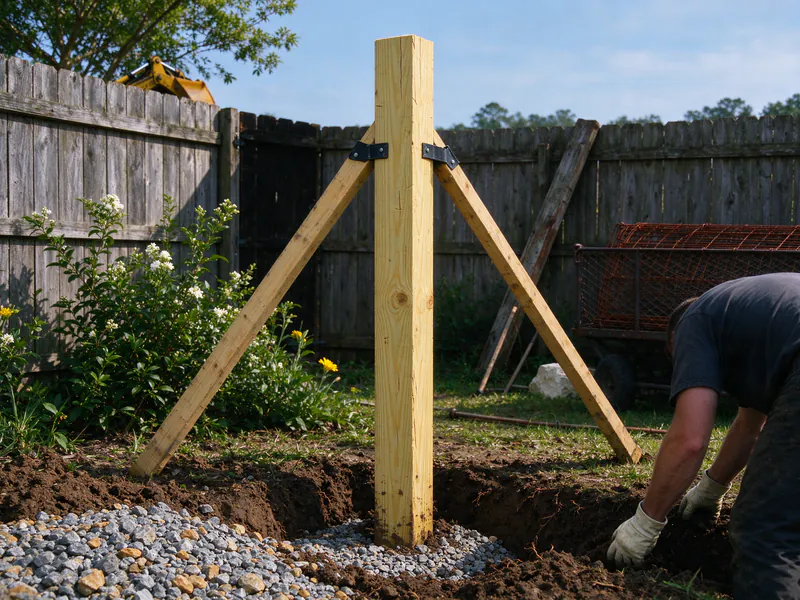
Depth follows the height of the fence, how solid its face is and the soil in that hole, so it is set per post rather than by a single rule. The footing drains at the bottom, with gravel under the post end, and the concrete is finished above grade and sloped away from the post. The post is braced plumb and the footing allowed to cure before the rails are fastened back, with hot-dip galvanized or stainless fasteners.
Matching the new post to the fence
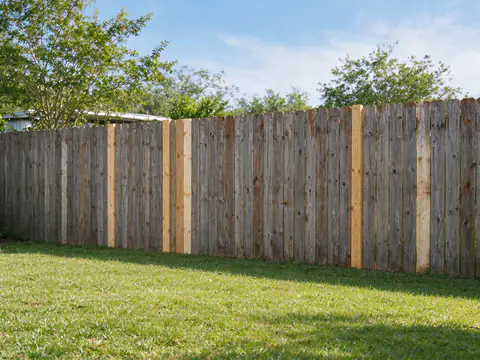
A replacement post has to fit a fence that was built years earlier. On a wood fence that means the same size, a top cut or cap to match, and rail heights that line up; new treated pine is lighter in color and grays over a season or two. Where the old rails were toe-nailed and their ends are soft, galvanized rail brackets carry them on the new post.
Other systems have their own matching problems:
- Vinyl: a vinyl post is a sleeve over a structural core; the new sleeve must match the profile and the routed holes of the old rails, and posts that carry gates often get an aluminum stiffener.
- Chain link: a line post and a terminal post are different parts. A terminal post at an end, corner or gate needs a heavier pipe and the fabric re-stretched to it.
- Aluminum and steel: the new post must take the panel’s brackets at the right spacing, and cut steel is coated so rust does not start at the cut.
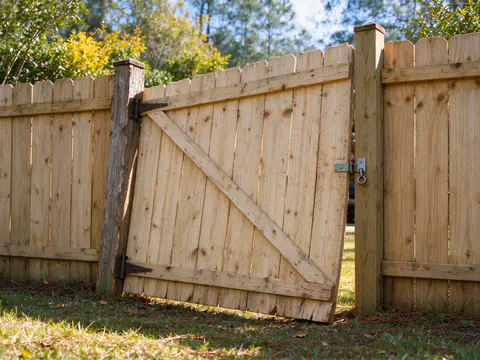
A gate’s hinge post is the post that fails most visibly. Replacing it is often the real fix for a sagging gate; see gate repair.
When one post becomes the whole line
Posts set on the same day, in the same soil, with the same treatment, tend to fail close together. One post that broke because a mower kept hitting it, or because it sat in the one wet spot on the line, is a repair. Three posts failing in a season is a pattern, and the rest of the run deserves a probe at grade before more money goes in.
That is the point where a fence replacement or a broader fence repair is worth pricing alongside, and the fence lifespan guide explains why.
What post replacement costs
Post replacement is priced by the post rather than by the foot, and no reliable published range for this area exists, so the drivers set it. They are the post material and size, whether the old footing is pulled, broken up or bypassed, access for equipment, whether the post carries a gate or a corner, how many posts are done in one visit, and a service minimum on very small jobs.
A gate post or a corner post costs more than a line post. The fence repair cost guide explains each driver, and if a storm took the post down, the storm-damaged fence repair page covers documenting it for a claim.