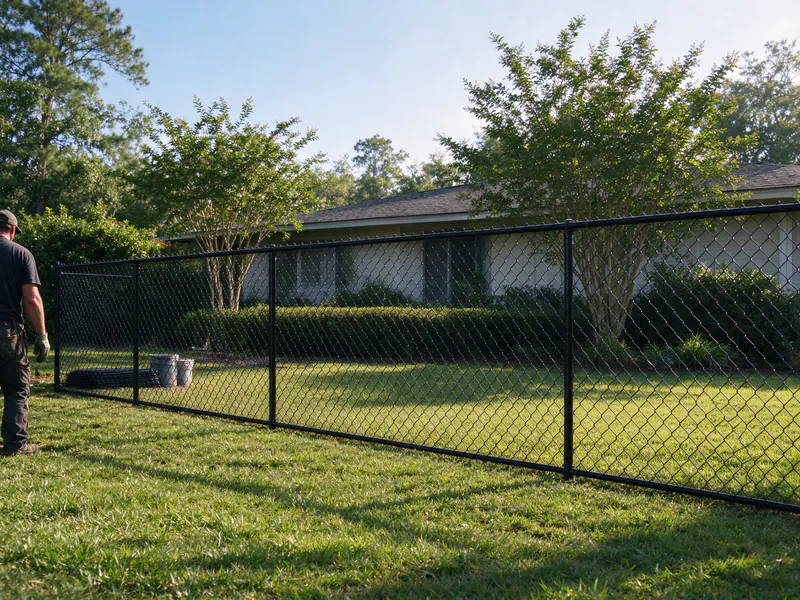
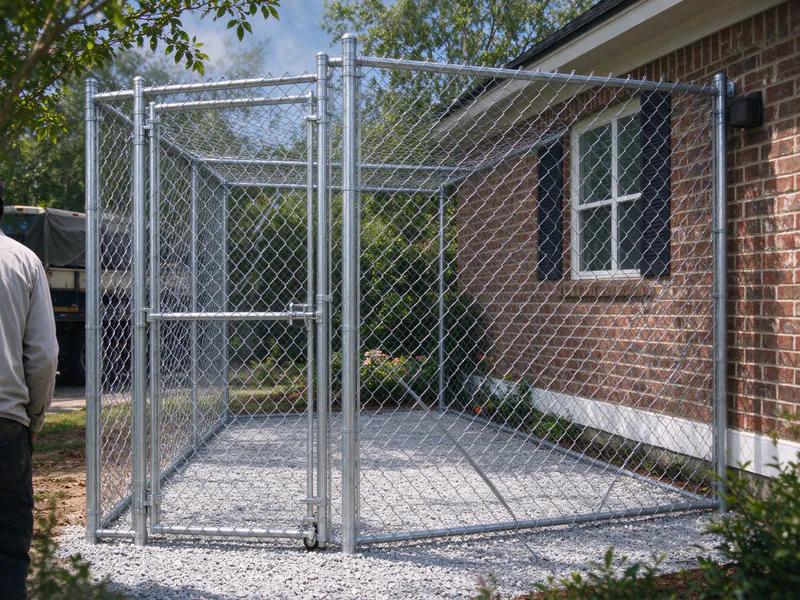
Chain link fence installation is the most practical way to enclose a yard around Hammond: it costs the least per foot, lets wind and water pass, and outlasts most wood when the framework is built right. Palisades Hammond Fence installs galvanized and vinyl-coated chain link fences across Hammond and the surrounding parishes, for back yards, dog runs, side lots and property lines. Installation is carried out by licensed and insured fence contractors.
What decides whether a chain link fence stays tight for decades or sags in five years is mostly hidden: the terminal posts, the bracing, the tension wire and the post spacing. This page covers those parts, Hammond’s front-yard and post-spacing rules, and what moves the price.
What happens on the first visit
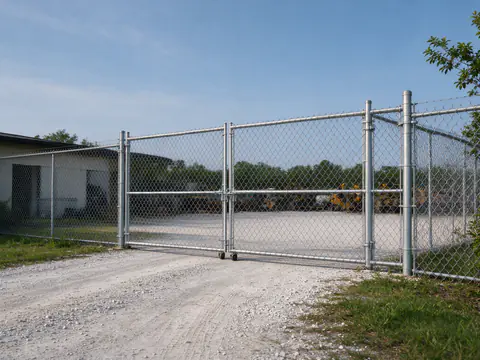
The walk starts at the corners and ends. Chain link is stretched between terminal posts, so the visit marks every place the line ends, turns more than a few degrees, changes grade sharply or meets a gate, because each one is a terminal post with its own brace. A straight run with one gate has few; a yard that zigzags around trees and beds has many, and that changes the materials list more than the footage does.
The visit also checks the front building line. Inside Hammond, chain link can’t go in front of the house, so the run usually starts at the front corner of the house and goes back. Low spots get noted, since fabric that spans a dip leaves a gap a dog can use. Then come the permit drawing from your survey or parcel map and the Louisiana 811 locate request, made at least 48 and no more than 120 hours before digging.
The parts that hold a chain link fence up
Chain link is a tension structure. The fabric is stretched like a drumhead between terminal posts, and everything else keeps that tension from pulling the fence over.
- Terminal posts. End, corner and gate posts, larger in diameter and wall than line posts. Tension bands and a tension bar clamp the fabric edge to them, and each takes the full pull of the stretched fabric.
- Brace rails and truss rods. A horizontal brace from each terminal to the first line post, often with a diagonal truss rod, stops the terminal from leaning toward the run.
- Line posts. Carry the top rail and the fabric between terminals. They hold the fence in line but don’t resist tension.
- Top rail. Runs post to post along the top and keeps the fabric from folding over.
- Bottom tension wire. A heavy wire stretched along the base, tied to the fabric, so the bottom can’t be pushed out or lifted.
When a chain link fence goes slack, the cause is usually a terminal post that has rotated in soft ground or lost its brace, not the fabric. Retightening the fabric without fixing that post just pulls it further over. The industry installation practice is set out in ASTM F567.
Hammond’s post rule
Hammond’s development code requires wire fences to stand on galvanized pipe supports at least 1.5 in in diameter, set no more than 7 ft apart. Many standard residential layouts space line posts wider than that, so a fence inside city limits is laid out to the 7 ft maximum, which adds posts and footings to a long run. Outside the city the spacing follows the fence’s design and the local rule for that address.
Wet ground, corrosion and dogs
Hammond’s soils are mostly poorly drained silt loams with a seasonal water table close to the surface, according to USDA soil survey data. A terminal post in soft ground is a lever under constant pull, so terminals get deeper, wider concrete footings than line posts. Gate posts get more again, since a swinging leaf adds its own load.
Galvanized steel resists rust because zinc corrodes first and protects the steel underneath. That zinc wears fastest where the fabric stays wet: at grade, in sprinkler spray and where leaves and soil pile against the bottom. Keeping the fabric just off the soil and the line clear of debris adds years. Vinyl-coated fabric and framework put a polymer layer over the zinc.
Dogs find the weak spot at the bottom. A bottom tension wire stops pushing; a buried wire apron or concrete mow strip stops digging. The best fence for dogs guide compares chain link with other options for different dogs.
Mark the corners and gates first
Send the address, length, height and gates. Terminal posts and bracing set the plan.
Height, gauge, coating and slats
Most residential chain link around Hammond is 4 to 6 ft high. Fabric is sold by wire gauge (a lower number is thicker wire) and mesh size, and heavier fabric resists bending from impacts and climbing. Posts and rails come in different diameters and wall thicknesses, and the quote should name them, since thin framework is the easiest place to cut cost unseen.
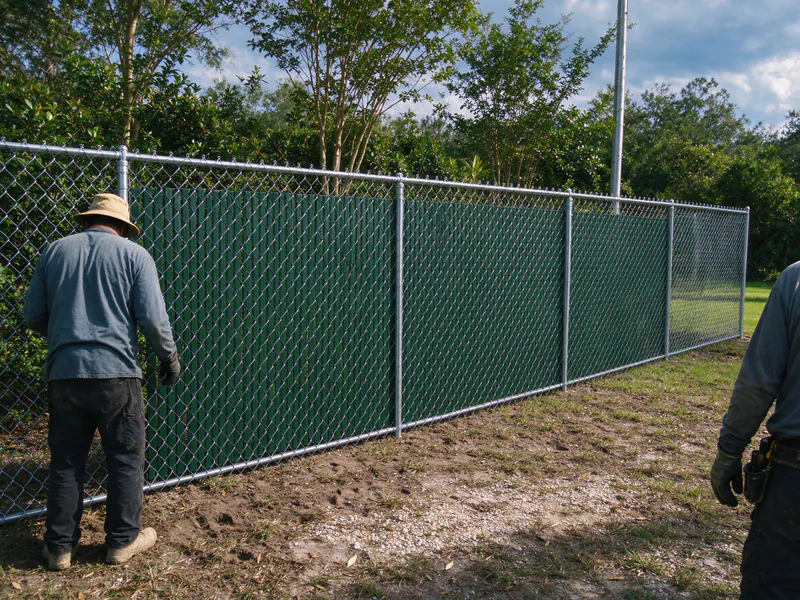
Coating changes looks and life. Galvanized is the baseline. Black or green vinyl-coated fabric with matching posts blends into planting and lasts longer in damp spots. Privacy slats woven into the mesh add screening but turn an open fence into something close to a solid face in wind, so a slatted run needs heavier posts or tighter spacing. The wind-resistant fence page explains how face area changes post loads.
Chain link passes water, which matters on lots that drain across the line. Debris still collects against the fabric in a flood, and a fence across a drainage servitude can be ordered cut or removed, which the drainage easement guide explains.
Gates on chain link
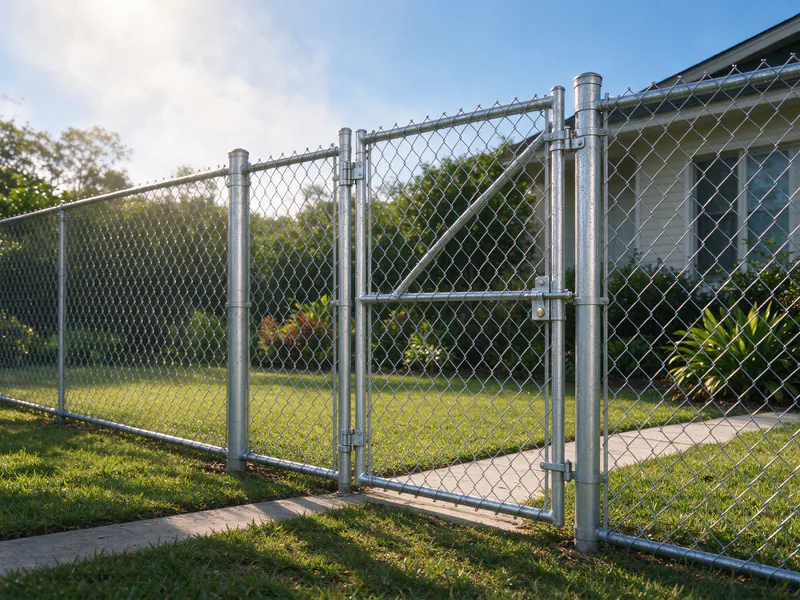
Walk gates are usually 3 to 4 ft wide on a welded pipe frame; drive gates are wider and often double. A chain link gate is light compared with wood or steel, but the hinge post still carries it as a lever, so it is set as a terminal with a deeper footing. Wide openings get double leaves with a drop rod and a center stop. For a rolling or cantilever gate on a driveway, see driveway gate installation.
Where chain link fits and where it doesn’t in Hammond
Behind the front building line chain link is allowed, and residential side and rear fences are generally capped at 8 ft, measured from the lower side; the permit confirms the height for your lot. In front, Hammond’s code bars it, and the Hyer-Cate overlay repeats the ban. Within 30 ft of a street intersection, nothing may stand over 3 ft. The residential permit is $10, doubled if work starts first.
Covington’s historic guidelines limit chain link to rear yards or places not visible from the street, as the Covington page explains. The fence permit guide covers the rest, and the chain link vs wood guide helps if you are torn between the two.
What chain link costs around Hammond
A typical Hammond-area range for residential galvanized chain link, 4 to 6 ft high and installed, is about $10 to $30 per linear foot. Long, straight runs on flat ground sit low; many corners, wet ground, taller fabric and extra gates push it up. Black vinyl-coated fabric and privacy slats sit at or above the top of that range. Walk gates typically add $150 to $600 each, and removal of an old fence $2 to $8 per foot under fence replacement.
Homeowners report short runs pricing far higher per foot, because setup, terminals and gates cost the same on 20 ft as on 200.
Labor costs less here than nationally: Louisiana fence erectors earn a mean $19.92 an hour against $24.29 nationally (BLS OEWS). A wage is not a billing rate, since an installed price also carries materials, insurance, licensing, vehicles and overhead. The chain link cost guide and the fence cost estimator take it further.