Covington publishes its own fence permit form, and that form asks for the whole plan before a post goes in.
Palisades Hammond Fence, a fence company working across Covington and the Hammond area, installs and repairs wood, vinyl, aluminum and chain link fences and gates across Covington, from cottage lots in the downtown historic district to subdivisions such as the West 30s, West 20s and River Forest. Licensed and insured fence contractors carry out the installation. This page sets out the city’s own permit process, the historic district’s design rules and the ground conditions that shape a fence here.
The $5 permit and the drawing behind it
The City of Covington requires a fence permit, and the fee is $5, paid by check or money order. The city’s fence permit application asks for a detailed drawing showing the existing and proposed fence heights and locations, the property lines, streets, building footprints and a north arrow.
The form then records height, length, material and style separately for the front yard, a “non-primary front”, the side yard and the rear yard, and asks whether each section is privacy or 50% open. It asks whether any vehicle gate opens toward the street. Non-residential jobs add the owner’s authorization and the location of every gate.
Two lines on that form shape the plan. A corner lot’s second street frontage is its own category, so the street side of a corner lot is drawn and judged separately from the side yard behind it. And the form states that the property owner alone is responsible for locating property, right-of-way and easement lines, and may have to remove a fence that encroaches at their own expense.
That is why a Covington fence starts from a survey or the recorded plat rather than the old fence line. The fence permit guide and the drainage easement guide cover both.
Height limits for front, side and corner yards outside the historic district come from the city’s zoning code, and they are confirmed for each address with the Permit Department at (985) 898-4725 before materials are ordered. The fee is half of Hammond’s $10 residential permit, but the drawing asks for more.
Fences in the historic district
Inside the historic district, a fence that can be seen from the street is a design decision as well as a permit. The Covington Historic District Commission issues Certificates of Appropriateness for building or altering any structure or appurtenance in the district, and its design guidelines, adopted in 2012, are specific about fences:
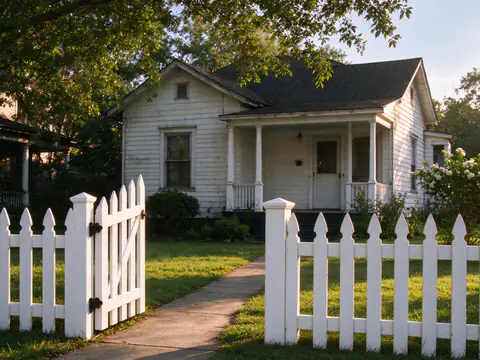
- Wood front fences: no taller than 3 ft, with pickets less than 4 in wide spaced less than 3 in apart, painted to complement the house.
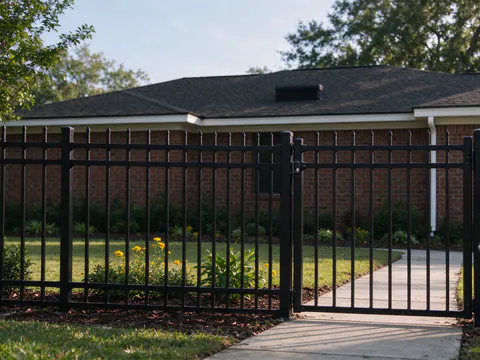
- New metal fences: under 3 ft.
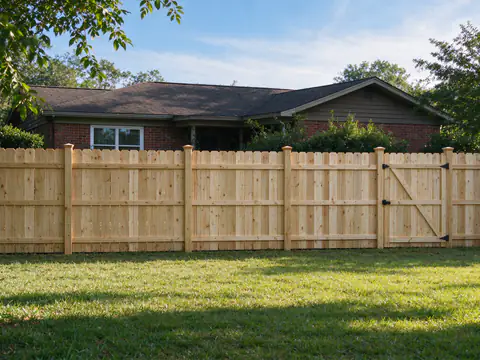
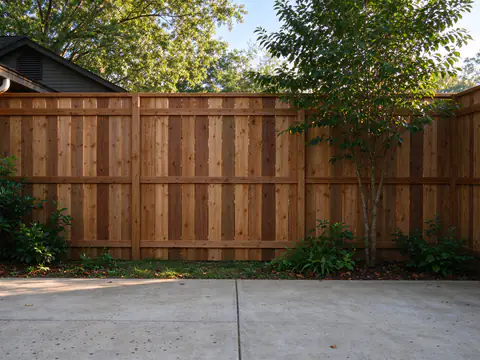
- Solid wood board fences: back yards only, no taller than 6 ft.
- Chain link, split or horizontal rail, railroad-tie and timber fences: rear yards or places not visible from the street, with dark green or black coating encouraged.
- Historic fences and walls: retained rather than removed.
In practice the front of a district home gets a painted picket fence or a low aluminum fence, and privacy becomes a back-yard feature that stops at 6 ft. A picket built to the guideline’s board width and spacing goes into review already matching what the commission asks for. Approval comes before the permit, so it sets the start of the schedule; the current guidelines are confirmed with the commission when the plan is drawn.
Sandy loam, two rivers and big trees
Covington sits at the fork of the Bogue Falaya and the Tchefuncte River, and the ground shows it. USDA soil survey points around the city map mostly Myatt and Stough fine sandy loams, poorly drained at most points, with the seasonal high water table between the surface and about a foot down and around 8 inches at the median point.
Sandy loam digs more easily than the silt loams around Hammond, but a hole can fill with water before the concrete goes in, and wet sand grips a post less firmly.
Footings get gravel at the base and concrete crowned above grade, and solid fences get deeper or wider holes. NOAA’s 1991-2020 normals for the Covington station average 62.5 inches of rain and about 29 nights at or below freezing a year, so water and wind set the post plan, not frost.
FEMA’s online flood layer has a gap over this part of St. Tammany, so for lots near either river the flood zone is checked on the flood map for that address before a solid fence is drawn across low ground. The wet soil post guide goes further.
Trees, roots and storm limbs
Trees are the other local factor. Covington requires a permit to remove a tree, and the city’s tree guidance calls for fencing off a protection zone before clearing and keeping trenches out of a tree’s critical root zone. Where a fence line passes a large live oak or pine, posts are placed to span the roots rather than cut through them, and holes near the trunk are dug by hand.
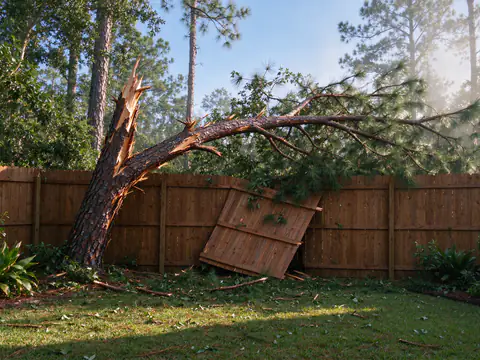
A line under a canopy also takes falling limbs in a storm. FEMA’s major disaster declarations covering St. Tammany Parish include Katrina, Isaac, Ida in 2021, Francine in 2024, and Tropical Storm Arthur, declared June 30, 2026. A run that went over at the posts is a job for storm-damaged fence repair, and the storm insurance guide covers documenting it.
Detached houses and shared lines
Census figures describe a city of houses more than apartments: about 80% of Covington’s housing units are single-family detached and about 70% are owner-occupied, with a median year built of 1991 and 29% built before 1980. Those are citywide figures, not a reading of any lot, but they mean the typical setting is a detached house with its own yard and its own line to settle with the neighbors.
A fence built on that line is presumed common to both owners under Louisiana Civil Code article 685, as the Louisiana fence law guide explains. A Covington mailing address does not always mean the City of Covington either: outside city limits, St. Tammany Parish sets the rules, confirmed per address.
How a Covington job usually runs
- It starts with the address, which settles whether the lot is inside city limits, inside the historic district or on a corner.
- The site walk measures the line, marks gates and street frontages, notes trees and wet spots, and checks the survey or plat against what is on the ground.
- In the historic district the design goes to the commission first.
- Next comes the drawing the permit form asks for, with heights and styles yard by yard, and the $5 application to the Permit Department.
- With the permit issued, the Louisiana 811 request goes in at least 48 and no more than 120 hours before digging, not counting weekends and holidays.
- Posts are set and allowed to cure before rails, boards or panels go on, gates are hung last so they close square, and the job ends with a walk of the finished line.
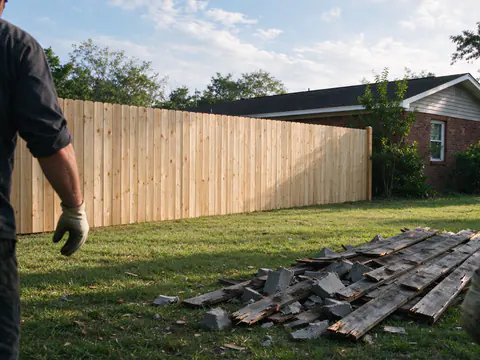
Replacing an old fence adds tear-out and disposal at the start, covered under fence replacement.
Why the plan follows the city line
Covington, Hammond and Mandeville each write their own fence rules. Hammond allows solid fences to 8 ft behind the house and charges $10 for a permit. Covington charges $5, and in its historic district holds front fences to 3 ft and back-yard privacy to 6 ft. Mandeville’s code, as quoted in 2023 staff reports, sets 7 ft for side and rear yards, with current details confirmed per address on the Mandeville page.
Prices do not change at the city line: wood fences and every other material are priced from the same Hammond-area ranges, and the fence cost estimator gives a figure for your length and options without a phone call.