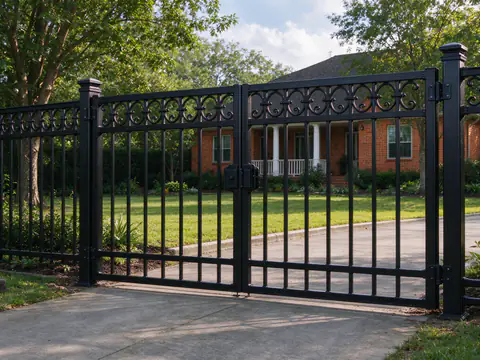
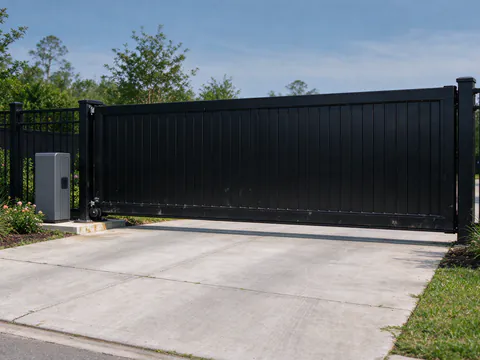
A gate is the only moving part of a fence, and it is where most fence complaints start. Palisades Hammond Fence installs walk gates, garden gates and double gates in wood, vinyl, chain link, aluminum and steel across Hammond and the surrounding towns, either as part of a new fence or added to one already standing. Installation is carried out by licensed and insured fence contractors.
Each gate is planned around what has to pass through it, how much the leaf weighs, and what the ground at the hinge post will do when it stays wet for weeks.
This page covers pedestrian and garden gates and double gates in a residential fence. Wider vehicle openings have their own page for driveway gates, and powered gates are covered under automatic gate installation. If a gate you already have is dragging or won’t latch, see gate repair.
Size the gate to what goes through it
Start with the widest thing that has to fit, then size the opening. The number that matters is the clear opening: the space between the hinge post and the latch post once the leaf is open, minus whatever the hinges, the latch and the gate’s own thickness take up. A gate sold or described as 4 ft can leave noticeably less than 4 ft of usable width once it is hung.
A walk gate and a driveway gate solve different problems. A walk gate is used many times a day by people carrying things, so it needs to be light enough to swing with one hand, close on its own and latch every time. A driveway gate is opened less often but has to clear a vehicle, so width and post strength dominate.
| What passes through | Clear opening to plan for | Usual layout |
|---|---|---|
| People, a dog on a leash | About 3 ft | Single walk gate |
| Push mower, wheelbarrow, rolling trash bins | About 4 ft | Single walk gate |
| Riding mower, small utility trailer | About 5 to 6 ft | Wide single leaf or a double gate |
| Car, truck, boat trailer | 10 ft or more | Driveway gate, usually double leaf |
These are planning numbers, not rules. Measure the actual mower deck or trailer, and leave room for your hands on the handles.
Walk gates and garden gates
A walk gate in a side yard is usually the busiest opening on the property. It is the route for trash bins, the lawn crew and the dog, and it is the gate most likely to be left open, so a self-closing hinge and a gravity latch are worth considering where a pet or a child needs containing. A garden gate into a vegetable plot or a fenced bed is lighter duty, but it often sits where the ground is soft from watering.
A few details change how these gates live day to day:
- Height and style match the fence. In Hammond, a gate in a front-yard fence is held to the same 4 ft limit as the fence, and it cannot be chain link in front of the house.
- Bottom clearance. A gap of an inch or two keeps the bottom rail out of puddles and grass. Too much gap lets a small dog through, so the gap is set for the yard.
- Latch reach. Latches can be set for opening from both sides, or keyed, or placed high where a child should not reach them.
- Pool gates are different. A gate in a pool barrier has closing, latching and swing-direction rules; see the pool fence page and the Louisiana pool fence requirements guide.
Why the hinge post decides whether a gate sags
A gate leaf is a cantilever. It hangs off one side of the hinge post, so its weight acts as a constant lever trying to pull the top of that post toward the opening. A line post in a run of panels is loaded evenly from both sides; a hinge post is loaded from one side, all the time, and harder every time someone leans on the open gate.
In ground that stays wet, that steady pull wins slowly. USDA soil survey data for Hammond maps mostly poorly drained silt loams with a seasonal water table that can sit within about 5 to 27 inches of the surface. Soft, saturated soil lets a lightly built hinge post rotate in its footing a fraction at a time, and the latch side of the gate drops until it drags or misses the strike.
Homeowners report this pattern in forum threads: a treated 4x4 gate post set in concrete that rotted through in six years, a driveway gate post in 18 inches of concrete that leans within a season, and concrete footings at a new gate that cracked within a year. Each is a post that was sized like a line post.
What changes at the gate posts
- Heavier posts. Gate posts are a size up from the line posts, or galvanized steel, especially for leaves over about 4 ft or for metal gates.
- Deeper, wider footings. The depth and diameter follow the leaf weight, its width and the soil at that address, not one number for every gate.
- Water kept off the wood. Gravel at the bottom of the hole lets water drain, and concrete is finished above grade and sloped away so rain does not pool at the post.
- Time to cure. Posts are set and the footings allowed to cure before the gate goes on, so the first swings don’t move a green footing.
The wet clay post guide goes into footing options, and the why fences fail guide covers gate sag alongside the other common failures.
Get the gate posts right the first time
Send the gate location, the width you need and the fence it hangs in. The post size and footing come first in the plan.
Gate frames: what keeps a leaf square
The frame decides whether the leaf stays rectangular. Once a frame racks into a parallelogram, the latch corner drops no matter how solid the post is.
Wood gates
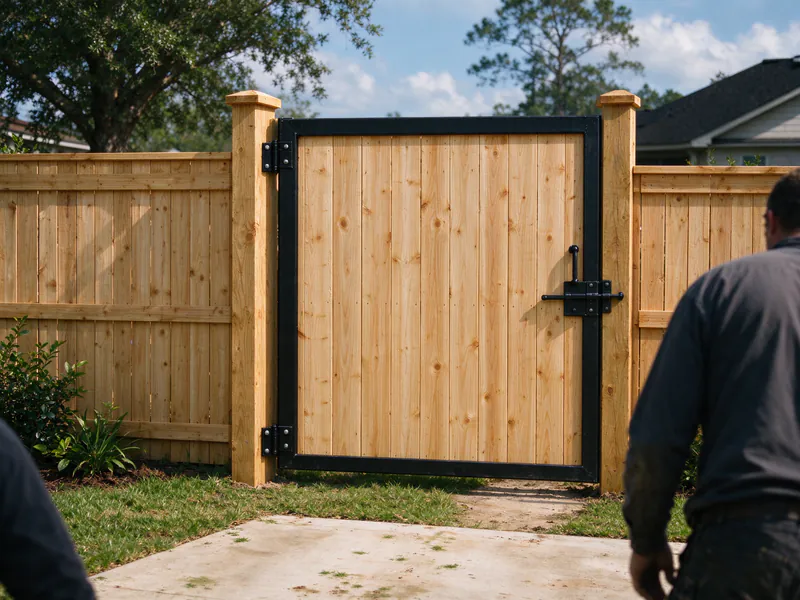
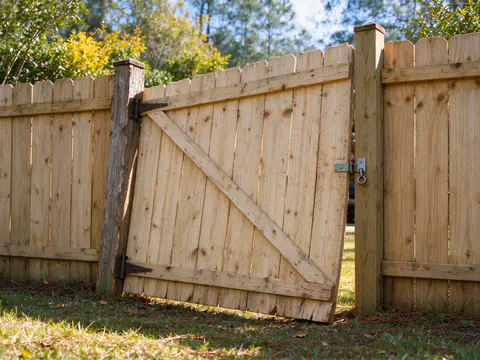
A wood gate needs a diagonal brace running from the bottom corner on the hinge side up to the top corner on the latch side. Installed that way, the brace is in compression and pushes the latch corner up. Installed the other way, it does almost nothing. Wide wood gates, or ones that must stay flat as the pine dries, are often built on a steel gate frame kit with the boards attached to it.
Vinyl gates
Vinyl rails and uprights flex, so wider vinyl gates rely on aluminum or steel inserts inside the frame. Without them a vinyl leaf over about 4 ft tends to sag across its width even on a solid post.
Chain link, aluminum and steel gates
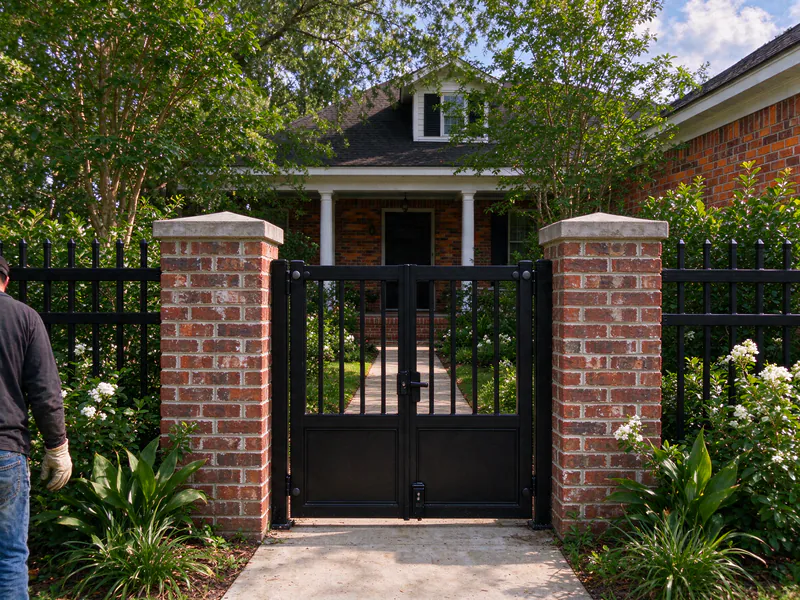
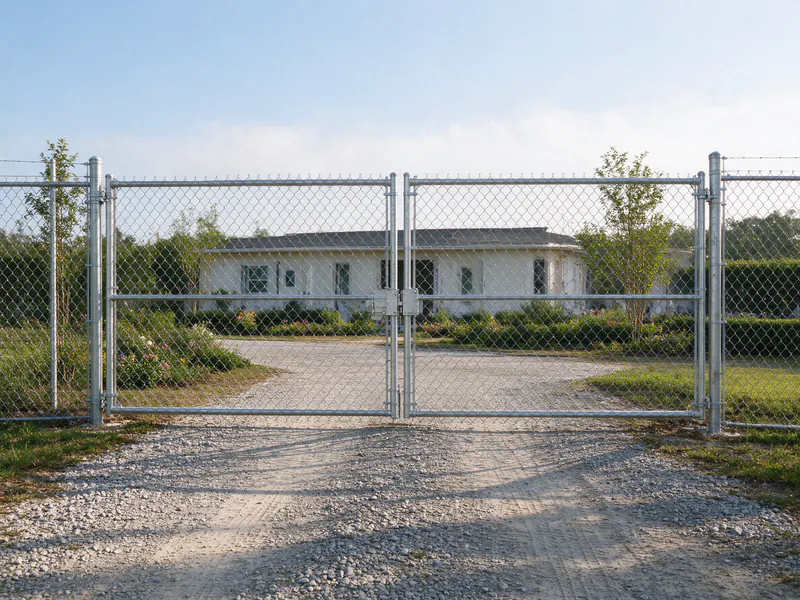
Chain link gates are galvanized pipe frames with the fabric stretched inside; wider ones get a truss rod. Aluminum and steel gates arrive as welded frames, and the weight they carry goes straight to the hinge post, which is why metal gate posts are matched to the leaf rather than to the fence.
Fasteners and hardware are hot-dip galvanized, stainless or powder-coated. The copper in treated pine corrodes plain steel, and the humidity here rusts bare hardware quickly.
Stops, latches and drop rods
A gate stop is a block or bar on the latch post that the leaf closes against. It takes the impact of a slammed gate so the latch doesn’t have to, and keeps the leaf from swinging past closed. A gate without one shakes its latch and hinge screws loose over a season.
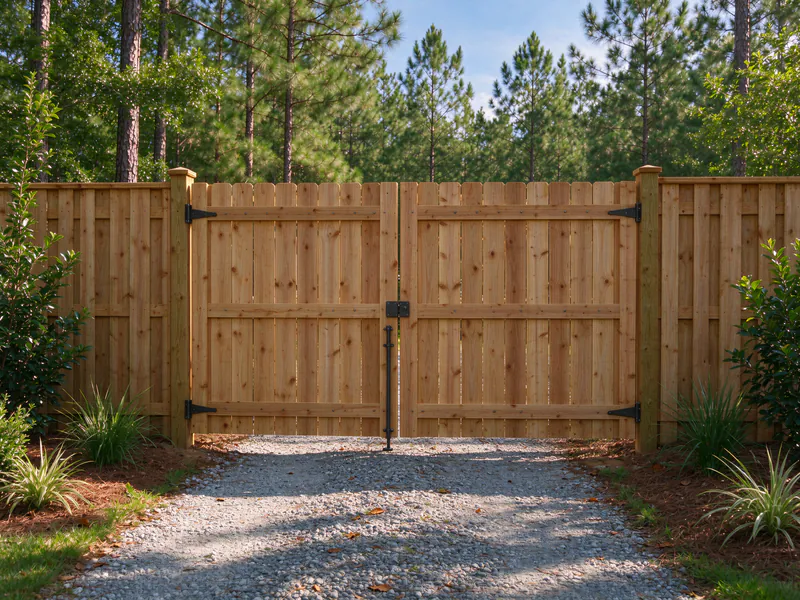
Double gates have no latch post in the middle, so one leaf is held fixed and the other latches to it. The fixed leaf needs a drop rod, a vertical rod that drops into a receiver in the ground or the concrete, and ideally a center stop. Homeowners with large double gates report the rods and latch failing to hold within a couple of years; the usual cause is a hinge post that moved, so the leaves no longer meet where the receiver was set.
Hammond rules that touch a gate
Inside the City of Hammond, a gate is part of the fence and goes on the same fence permit, which the city approves from a survey or parcel map. The residential fee is $10 and the commercial fee $50, doubled if work starts first. A gate in a front-yard fence follows the 4 ft limit, and neither the fence nor a swinging leaf may extend into the street right-of-way. Corner lots and driveway openings have sight clearance rules, so a gate near either is checked on the drawing.
Every new gate post is a hole, and Louisiana law treats an augered hole as excavation: 811 is notified 48 to 120 hours ahead, weekends and holidays excluded. Covington has its own permit and drawing, covered on the Covington page. The fence permit guide has the details for other towns.
What a gate adds to the price
A standard walk gate typically adds $150 to $600 in the Hammond area. A narrow wood or chain link gate on existing posts sits low; a wide leaf, a steel frame, self-closing hardware, ornamental metal or new heavier posts push it up. Double gates are priced as two leaves plus the drop rod, receiver and center stop. Driveway, sliding and automatic gates have no published per-gate range; they are priced from width, weight and equipment, explained in the gate cost guide.
When a gate goes in with a new fence, it is one line on the fence estimate. The fence cost estimator adds gates to a fence range, and the swing vs sliding gate guide helps if you are deciding how a wider opening should move.