A gate is the one part of a fence that moves every day, and it is usually the first part to fail. Palisades Hammond Fence repairs sagging, dragging and unlatched gates on wood, vinyl, chain link, aluminum and steel fences around Hammond and the nearby towns of Tangipahoa, St. Tammany and Livingston parishes. Installation is carried out by licensed and insured fence contractors, and gate repairs follow the same arrangement.
Gate problems look like hardware problems, so the first fix people try is the hinge screws. Most of the time the cause is elsewhere: a hinge post that has rotated in wet ground, a frame that has racked out of square, or a latch that no longer lines up because something else moved. This page explains how a gate fails and how each part is put right; the wider fence repair page covers the rest of the line.
Why gates sag: weight on a lever
A gate hangs off one side of its hinge post, and nothing holds up the other end until it reaches the latch. Its weight therefore acts as a lever, pulling the top of the hinge post toward the gate and trying to rotate the frame around its lower hinge. A wider or heavier leaf multiplies that pull, which is why a 4 ft walk gate can live on a 4x4 post while a 10 ft drive gate cannot.
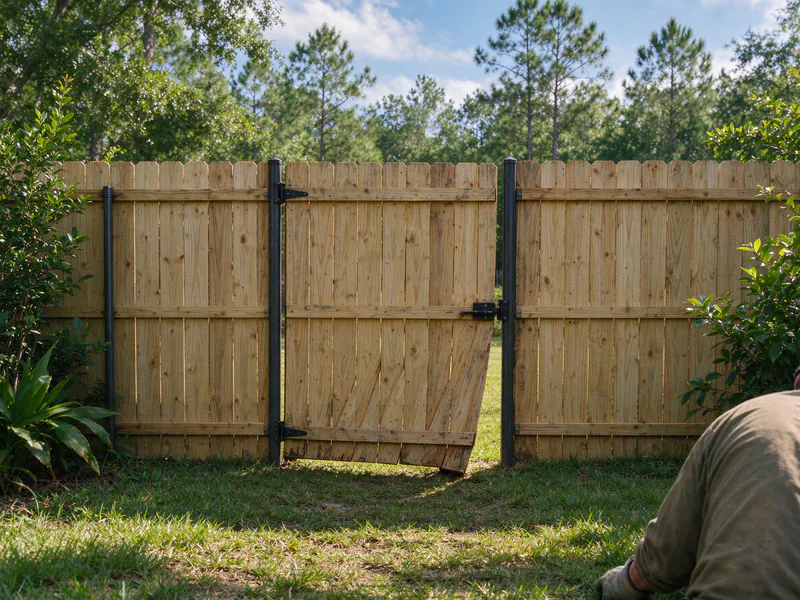
Three things give way under that constant pull. The hinge post leans or rotates in its footing, especially in soft, saturated soil. The hinge screws slowly pull out of the post or the frame. And a wood frame racks, its rectangle turning into a parallelogram as the joints loosen and the wood shrinks and swells. Any one of them drops the latch side; usually two are happening at once.
Find the part that moved
Before anything is adjusted, each part is looked at in turn, because fixing the wrong one hides the real cause for a few months.
| What you see | Check first | Likely cause |
|---|---|---|
| Latch side drags; gap at top of latch side | Hinge post with a level | Post leaning or rotating in its footing |
| Gate sags, hinge post plumb | Frame corners with a square | Frame racked; brace missing or running the wrong way |
| Gate drops when lifted, then rises | Hinge screws and bolts | Fasteners pulled out of the post or frame |
| Latch misses after rain, fine when dry | Both posts and the frame | Wet soil tipping the post; swelling wood binding |
| Double gate leaves won’t meet | Drop rods and both hinge posts | Leaves sagging; sleeve out of line |
| Gate swings open by itself | Hinge post plumb in both directions | Post leaning along the gate’s line, not only toward it |
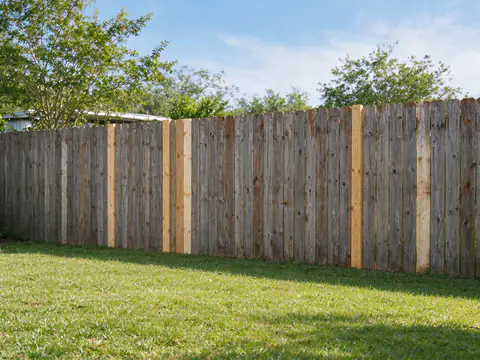
A gate’s alignment depends on the ground and the posts holding still. When the soil around a post softens or a post settles, the latch and hinge lines drift with it, and the hardware gets the blame. The why fences fail guide covers how wet ground moves posts generally.
The hinge post
The hinge post carries the gate, so it is checked first. A post that is out of plumb toward the gate, wobbles when the gate is lifted, or is soft at the ground line has to be dealt with before any other adjustment will hold. A sound post that rotated in a loose footing can sometimes be reset in a new footing; a post rotted at grade is replaced.
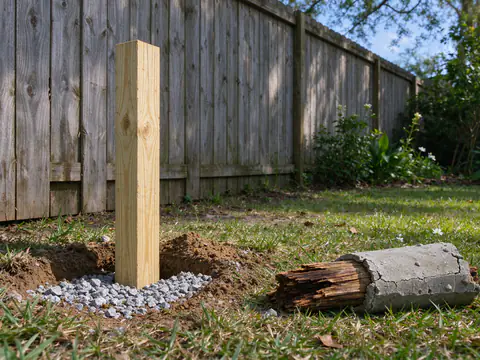
A replacement hinge post is usually heavier and deeper than the original, because the original was often a line post doing a gate post’s job. A 6x6 wood post or a galvanized steel post set in a footing that drains at the bottom, with concrete crowned above grade, handles the lever load far better. Digging a new post means a Louisiana 811 notice 48 to 120 hours ahead, weekends and holidays excluded. The fence post replacement page covers how old posts and their concrete come out.
Hinges and hardware
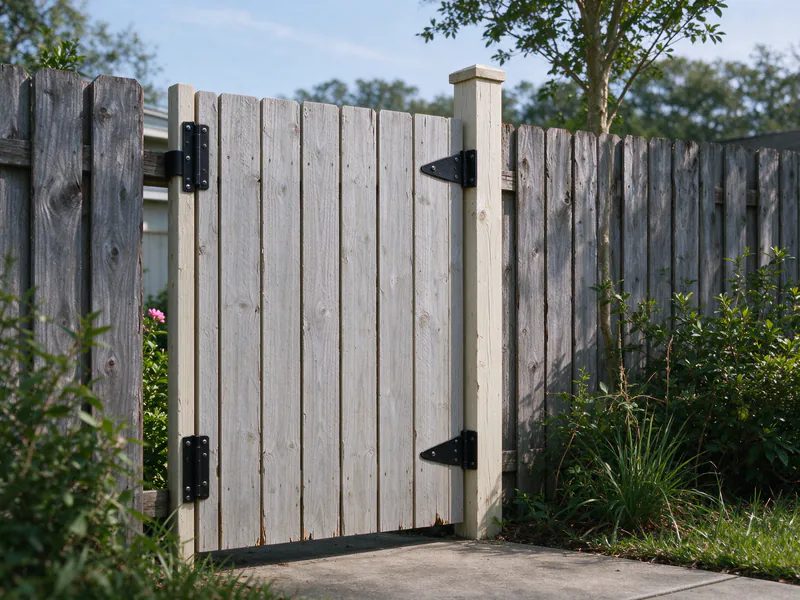
Hinges fail when they are too light for the leaf or fastened with screws too short to hold. Wood screws in a post that has been wet for years lose their grip, and the gate drops a little more each season.
The repair is heavier hinges, often strap or heavy T-hinges sized to the gate’s width, through-bolted to the post rather than screwed. Adjustable hinges let a gate be trimmed back into line later without shimming. All hardware is hot-dip galvanized or stainless, since plain steel rusts quickly against treated wood.
Send a photo of the hinge post at the ground
It tells more about a sagging gate than a photo of the hinges does. Add the gate's width and material.
The frame and its brace
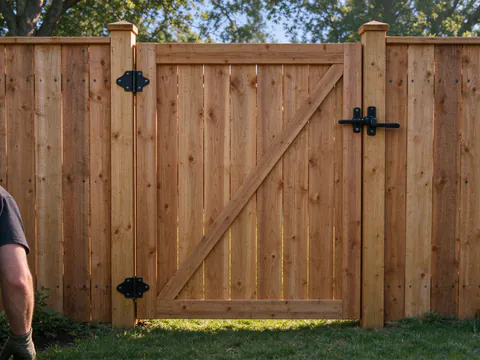
A wood gate frame stays square only if it is braced correctly. The diagonal brace should run from the bottom of the hinge side up to the top of the latch side, so the gate’s weight pushes along it and the brace works in compression. A brace running the other way does almost nothing, and gates built that way sag within a season or two.
A racked frame can be pulled back into square and held there in a few ways:
- Re-bracing with a new diagonal running the correct way, fastened at both ends.
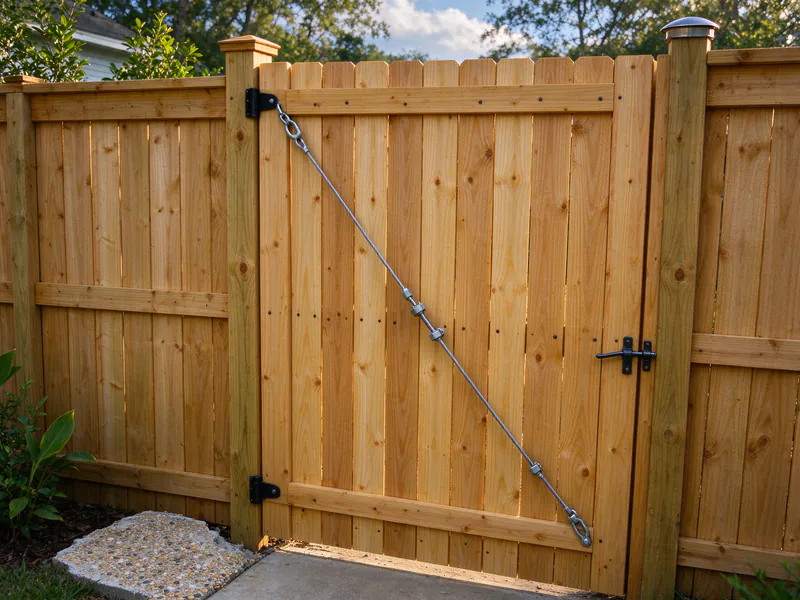
- A cable and turnbuckle running from the top of the hinge side to the bottom of the latch side, working in tension.
- A steel gate frame kit, with metal corners and a frame the boards fasten to, for wide or heavy wood gates.
Vinyl gates rely on an internal aluminum frame, and chain link and aluminum gates have welded or bolted frames; a bent or broken frame on those is usually rebuilt or replaced rather than braced.
Latches and alignment
A latch that will not catch is almost always a symptom. Once the post and frame are right, the latch is realigned or reset so the gate closes on its own swing. Gravity latches suit most walk gates; a gate used by children or for a dog may need a latch that can be locked or set higher. Wood gates are hung with a small clearance at the latch side so the frame can swell after rain without binding.
Pool barrier gates are a special case. Gates on a pool barrier have their own self-closing and self-latching requirements, and a gate that no longer closes and latches on its own has stopped doing its job. The pool fence requirements guide explains what applies.
Double gates and drop rods
Double drive gates add two failure points: each leaf sags on its own, and the drop rod that holds the inactive leaf has to land in something solid. Homeowners report rods that skip out of the ground when the gate is pushed, which happens when a rod rests in soil or gravel rather than a sleeve.
The repair levels both leaves first, then sets a pipe sleeve in concrete, or drills the slab, exactly under the rod. A center stop keeps the leaves from swinging past each other. Wide or heavy leaves may also need gate installation work on the posts, and driveway gates often need heavier posts than the fence beside them; the swing vs sliding gate guide compares the options for a driveway.
Adjust, rebuild or replace
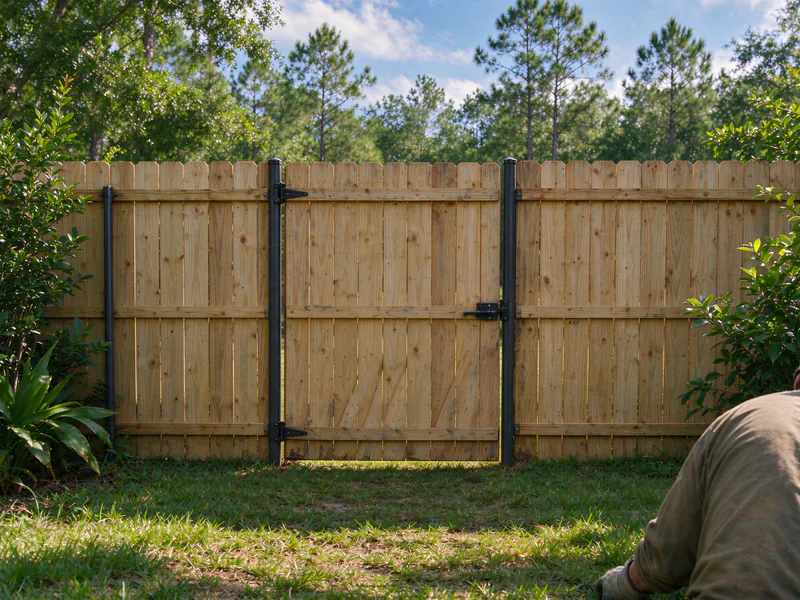
The order of repair follows the order of cause: posts first, then frame, then hinges, then latch. If the posts are sound and the frame is square, an adjustment and new hardware may be all a gate needs. If the frame has racked, it is rebuilt or braced. If the frame has rotted at its joints, or the leaf is too heavy for any hinge its posts can carry, a new gate usually costs about the same as a rebuild and lasts longer.
What gate repair costs
Gate repairs are priced by scope rather than from a published range, because the work runs from a latch adjustment to a new hinge post and footing. The drivers are the gate’s width, weight and material, whether a post has to be replaced and how its footing comes out, the hardware needed, and whether a double gate needs drop rods and sleeves reset.
For comparison, a new standard walk gate typically adds about $150 to $600 to a fence in the Hammond area, a budgeting range rather than a quote. The gate cost guide covers larger and driveway gates, and the post rot and termite guide explains what damages hinge posts.