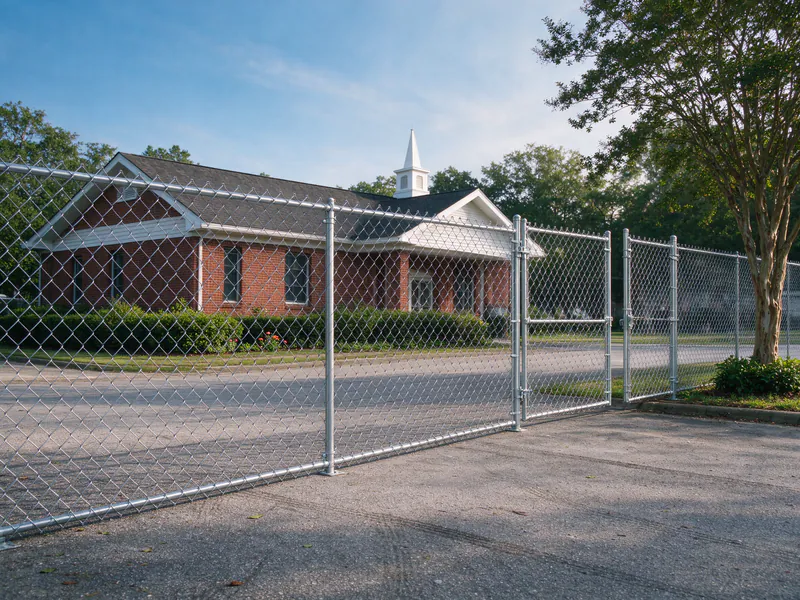
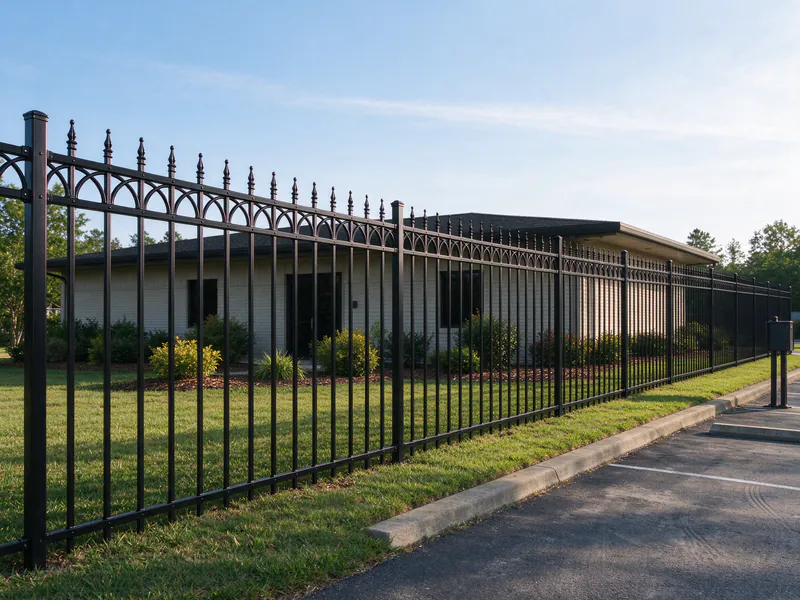
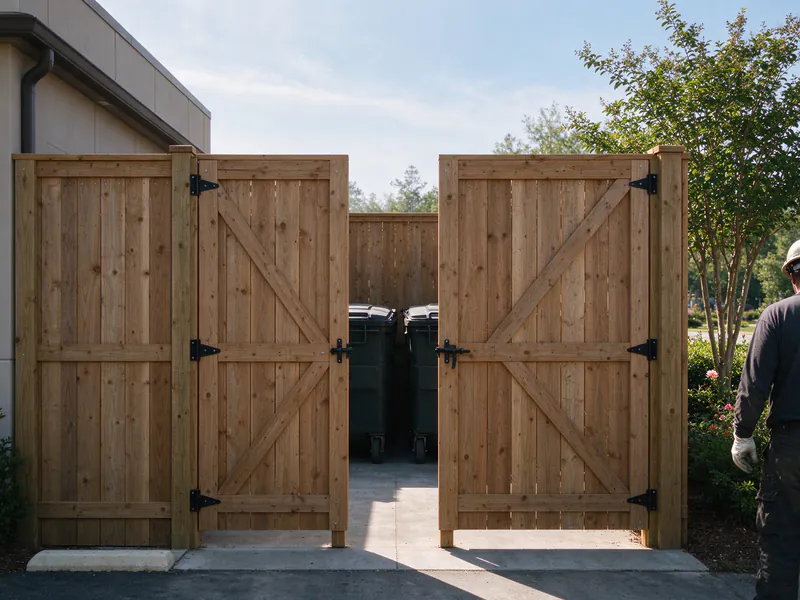
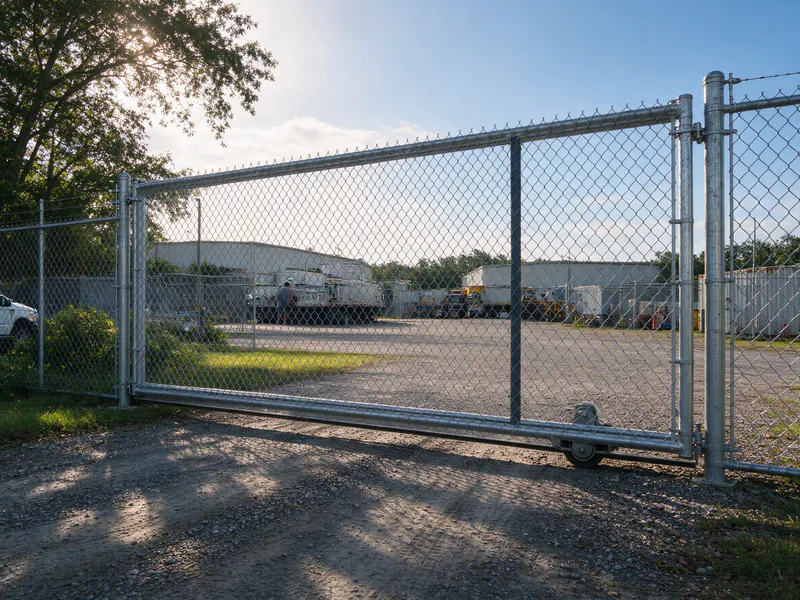
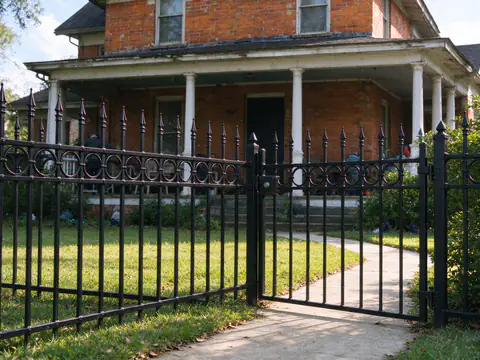
Commercial fence installation is planned around how a property is used: who comes in, who stays out, where vehicles turn, and which neighbors the code protects. Palisades Hammond Fence installs commercial fences across Hammond and the surrounding parishes, including security chain link around yards and equipment, ornamental steel and aluminum for storefronts and multifamily sites, and solid buffer screens beside homes. Installation is carried out by licensed and insured fence contractors.
Commercial work runs under different rules from a back-yard fence. Hammond’s code allows taller wire fences in commercial districts, can require a buffer fence between uses, restricts barbed wire and sets a separate permit fee, and state licensing changes with project value. This page explains those rules, how security fencing is built, and how gates and phasing shape the job.
What happens on the first visit
The site walk is with the owner or manager, and it starts at the gates. Vehicle entrances, delivery routes, turning space, emergency access and pedestrian paths decide where gates go, how wide they are, whether they swing or roll, and whether they need an opener. The fence line is then laid out from those openings, with corners, grade changes and drainage swales marked.
Commercial sites hide more underground. Louisiana 811 marks public utilities after a request made at least 48 and no more than 120 hours before digging, but private lines such as parking lot lighting, irrigation, private water and sewer and site security cabling are the owner’s to locate. The walk asks for site plans or a private locate before any post hole is drilled. Neighboring homes, parking that abuts the line and any servitude on the plat are noted too.
Hammond’s commercial fence rules
Hammond’s development code has several provisions that apply mainly to commercial and industrial property. They set the shape of the job before materials are chosen.
- Buffer fences. The Building Official may require a solid fence 6 to 8 ft high between residential and commercial or industrial uses, paid for by the use causing the nuisance.
- Parking. Where parking abuts a buffer, the code calls for curb or wheel stops and a 2 ft green strip, and fences next to parking lots are protected by wheel stops.
- Height. Open wire fences can reach 10 ft in commercial and industrial districts.
- Barbed wire. Not allowed in residential districts.
- Posts and wood. Wire fences stand on galvanized pipe supports at least 1.5 in in diameter, no more than 7 ft apart, and wood must be weatherproofed.
The commercial fence permit is $50, doubled if work starts before it is issued, and the city may halt work or require removal. Corner sight rules still limit anything within 30 ft of an intersection to 3 ft. The fence permit guide walks through the application.
Beyond Hammond
Each town sets its own commercial rules. Ponchatoula’s permit checklist asks for the location and size of fencing or buffer zones on commercial site plans. Covington’s fence permit asks non-residential applicants for the owner’s authorization and the gate locations, as the Covington page explains. Mandeville limits barbed wire to its B-2, B-4, M-1 and M-2 districts, above 6 ft; the Mandeville page covers its other limits, and current details are confirmed per address.
Security fencing: what makes a fence hard to beat
A fence delays and deters. It does not make a site secure on its own, and how much it delays depends on details that are easy to cut from a bid.
Height, mesh and framework
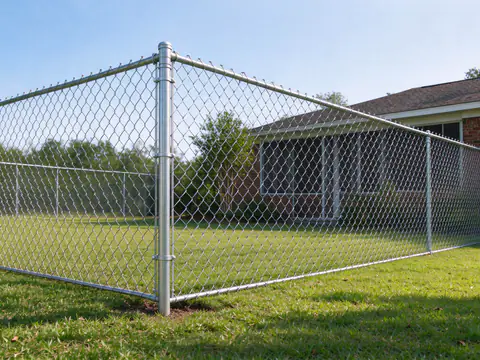
Taller fabric is harder to climb, which is why Hammond’s 10 ft allowance matters on yards. Heavier-gauge fabric resists cutting and bending, and a smaller mesh leaves fewer toeholds. The framework carries all of it: heavier line and terminal posts, a top rail, and a bottom tension wire or fabric set close to grade so it can’t be lifted. The installation practice for chain link is set out in ASTM F567, and the chain link fence page explains terminal posts and bracing.
Tops and gates
Barbed wire on angled arms adds height and deterrence where zoning allows it. Gates are the weak point of every perimeter: hinge posts, latches, drop rods and the gap under the leaf all get the same attention as the fabric. Keeping a clear strip along the inside and outside of the line, without stacked materials or trees, removes the easiest ways over.
Start with the site plan
Send the address, a site plan or aerial with the line drawn, the height and the gates. Zoning and access set the plan.
Gates, access and wind
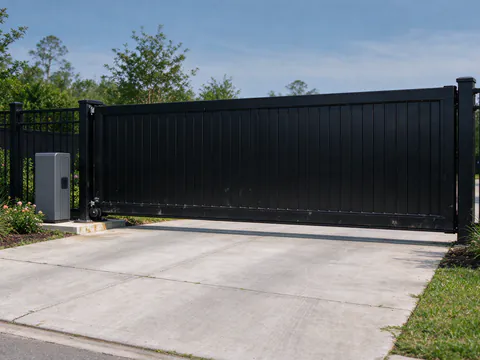
Vehicle gates on commercial sites are often wide, so the choice between swing and rolling gates comes down to space and traffic. A swing gate needs a clear arc; a rolling or cantilever gate needs room beside the opening. The swing vs sliding gate guide compares them, and openers, keypads and safety devices are covered under automatic gate installation.
Wind changes the post plan on tall fences. An open 10 ft chain link fence passes most wind, but privacy slats, windscreen fabric or banners turn it into a sail, and a solid 8 ft buffer takes the full load. FEMA has declared major disasters covering Tangipahoa Parish for storms from Katrina to Francine in 2024, so tall screened fences get heavier posts, closer spacing and deeper footings in the area’s poorly drained soils. The wind-resistant fence page explains the loads.
Licensing and phasing
The Louisiana State Licensing Board for Contractors requires a commercial license for commercial projects of $50,000 or more in labor and materials, including subcontractors and specialty trades. Hammond also registers contractors not licensed by the state. Ask which credential covers your project.
Most commercial sites have to stay open while the fence goes in. Work is sequenced so an entrance is never left unsecured overnight, old fence comes out in sections as new posts go in, and posts cure before gates are hung and loaded. Hours, deliveries and closures are agreed before the first post.
What a commercial fence costs
No regional published range exists for commercial chain link, so prices come from the site itself. Height, fabric gauge and coating, post diameter and wall, barbed or razor tops, the number and width of gates, openers and access control, phasing and after-hours work, and tear-out all move the price. Ornamental and buffer fences start from the material ranges on the fence installation cost guide, at commercial grades.
Labor runs below national levels: construction laborers in the Hammond metro earn a mean $19.63 an hour against $25.02 nationally (BLS OEWS). A wage is not a billing rate, because an installed price also covers materials, insurance, licensing, equipment and overhead. The fence cost estimator gives residential ranges as a starting point.