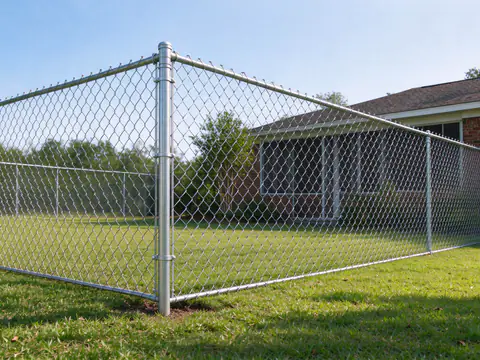
Chain link costs less, lets wind and light through and lasts well with little care, but gives no privacy and isn’t allowed in front of a Hammond home. Wood gives privacy and a finished look at a higher price and needs posts that resist rot. Residential chain link typically runs $10 to $30 per foot installed, and 6 ft pine privacy $15 to $45.
Palisades Hammond Fence installs chain link and wood fences for homes and businesses in Hammond and across Tangipahoa Parish, western St. Tammany and eastern Livingston Parish. Installation is carried out by licensed and insured fence contractors. This guide compares the two on what each fence is for, the local rules, storms, wet ground and price, and explains when a mixed fence line is the better answer. The chain link fence installation and wood fence installation pages cover how each is built.
Start with what the fence is for
Chain link and wood solve different problems. Chain link keeps children, dogs and equipment in, keeps people out, and marks a line while leaving the view open. Wood privacy blocks sightlines from the street and the neighbors, softens noise a little and looks like part of the house. If the main goal is containment on a back or side line, wood is often paying for privacy nobody needs there.
The opposite holds where people sit. A patio, pool deck or bedroom window facing a neighbor’s yard usually wants a solid screen. Chain link with slats can get partway there, but it never looks like a wood fence, and slats add wind load. The fence planning guide walks through deciding what each run of a fence should do.
Where local rules decide for you
Inside the City of Hammond, a fence in front of the house can be no more than 4 ft and must be wood, metal other than chain link or barbed wire, decorative or simulated wrought iron, or masonry (UDC 4.1.8.C, City of Hammond). Woven wire is also prohibited beyond the front building line. The Hyer-Cate Preservation Overlay repeats the chain link ban and is stricter than base zoning.
Behind the front of the house, chain link is allowed, and the code sets a floor for how it is built: galvanized pipe supports at least 1.5 inches across, spaced no more than 7 ft apart. In commercial and industrial districts, open wire fences can reach 10 ft. A residential permit costs $10, a commercial one $50, and either doubles if work starts first. The fence permit guide covers the steps.
In Covington’s historic district, the design guidelines place chain link only in rear yards or where it isn’t visible from the street, with a dark green or black coating encouraged. The Covington service area page explains that review. Outside these jurisdictions, the rule is confirmed for each address.
How each handles storm wind
The force of wind on a fence grows with the area of its face, and chain link fabric is mostly holes. A solid 6 ft wood privacy fence presents its whole face to a gust and levers that load onto every post at the ground line. Chain link lets most of the same wind pass through, so its posts carry a fraction of the load. That is why a chain link line can stay upright through a storm that flattens a privacy fence on the next lot.
The picture changes when the fabric fills in. Privacy slats, windscreen fabric and heavy vines turn chain link into a partly solid face, and a frame sized for open fabric can bend at the top rail or lean at the posts. Falling limbs are the other storm risk: chain link usually bends and can be re-stretched, while a wood bay hit by a limb often loses posts as well as boards. The storm-damaged fence repair page covers both.
Wet ground: rust against rot
Around Hammond the soil is mostly poorly drained, and the water table can sit within inches of the surface for part of the year. Both fences meet that ground at their posts. A wood post decays in the band just above and below grade, where wood stays wet, warm and full of oxygen. Subterranean termites work the same zone. Ground-contact treated posts and footings that shed water slow both.
A galvanized steel post doesn’t rot or feed termites. Its protection is a zinc coating that slowly sacrifices itself to protect the steel, and it is used up fastest where the metal stays wet: at the grade line, in low spots that flood and where fabric lies in mulch or soil. Once the zinc is gone, the steel rusts, thins at the ground and loosens its fabric ties. Vinyl-coated fabric adds a second barrier where water sits.
Dogs, kids and climbing
Chain link’s diamond openings give small feet a toehold, so a determined child or dog can climb a 4 ft fence. A wood privacy fence with its rails on the outside offers nothing to grip from the yard side. Chain link, on the other hand, lets a dog see the street, which can mean more barking at passers-by. Both can be dug under in soft, wet soil, and a buried wire apron helps on either. The best fence for dogs guide goes through each behavior.
Price side by side
These are typical Hammond-area ranges for budgeting, installed:
| Fence | Typical range per linear foot | What moves it |
|---|---|---|
| Residential chain link, 4 to 6 ft galvanized | $10 to $30 | Height, fabric gauge, framework; black vinyl-coated fabric and privacy slats sit at or above the top |
| 6 ft pressure-treated pine privacy | $15 to $45 | Style, wet or root-filled ground, gates, tear-out |
| 6 ft cedar privacy | $22 to $55 | Board grade, post type, finish |
| Walk gate, either fence | $150 to $600 each | Width, frame, hinges and latch |
Commercial chain link, with heavier fabric, larger posts and security tops, is priced from its specification rather than a residential range; see the commercial fence installation page. The chain link fence cost guide breaks residential pricing down further.
When a mixed fence line makes sense
A lot doesn’t have to use one material all the way around. One practical layout puts a 6 ft wood privacy section across the back of the house or along the side facing the closest neighbor, then runs chain link along the rear and far side lines where only containment matters. Inside Hammond, the front can carry a 4 ft wood picket or metal fence where chain link isn’t allowed.
The joint between systems needs planning: a heavy terminal post where the chain link fabric ends, and a gate placed where both fences meet solid posts. Done well, a mixed line costs less than full privacy and puts the screening where it is used. To price a mixed layout, call Palisades Hammond Fence at (985) 866-3827 or start with the fence cost estimator.
Privacy on one side, open fabric on the other?
Send a sketch of the lot and what each side needs to do, and get each run priced on its own.