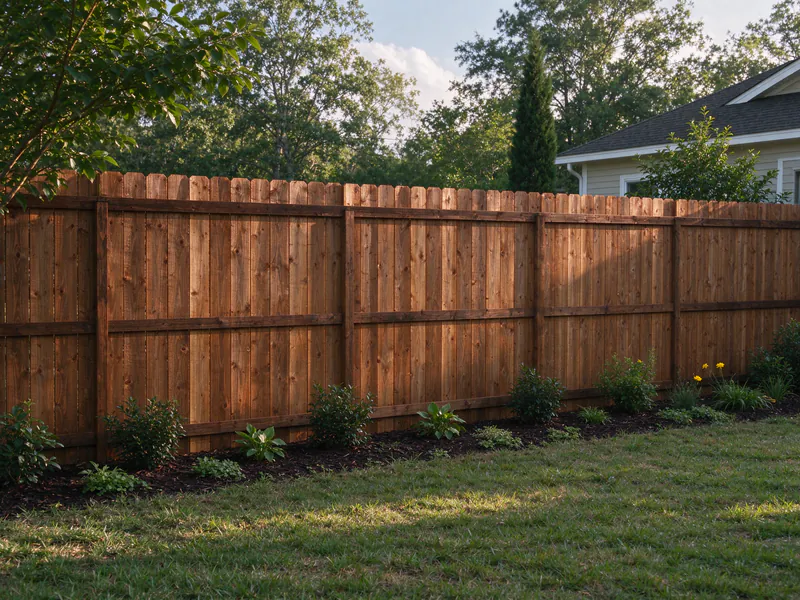
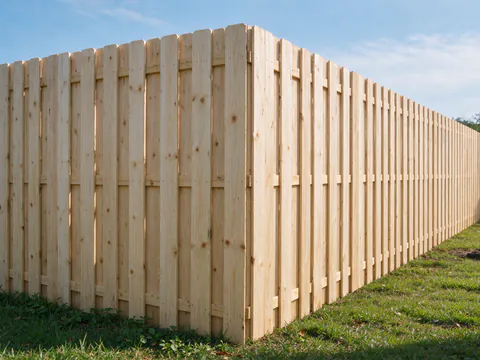
A stain is how a wood fence keeps its color and its surface in Hammond’s sun and rain. Palisades Hammond Fence cleans, stains and seals wood fences across Hammond, Tangipahoa Parish and the nearby towns of western St. Tammany and eastern Livingston Parish, on new pine and cedar and on fences that have already gone gray. Installation is carried out by licensed and insured fence contractors.
A finish here works against a hard climate: NOAA’s normals for the Hammond station show about 64 inches of rain a year, 86 days at or above 90°F and a long humid season between them. This page covers what that does to bare wood, which finish fits which fence, when new wood is ready and how the work is timed.
What weather does to bare wood
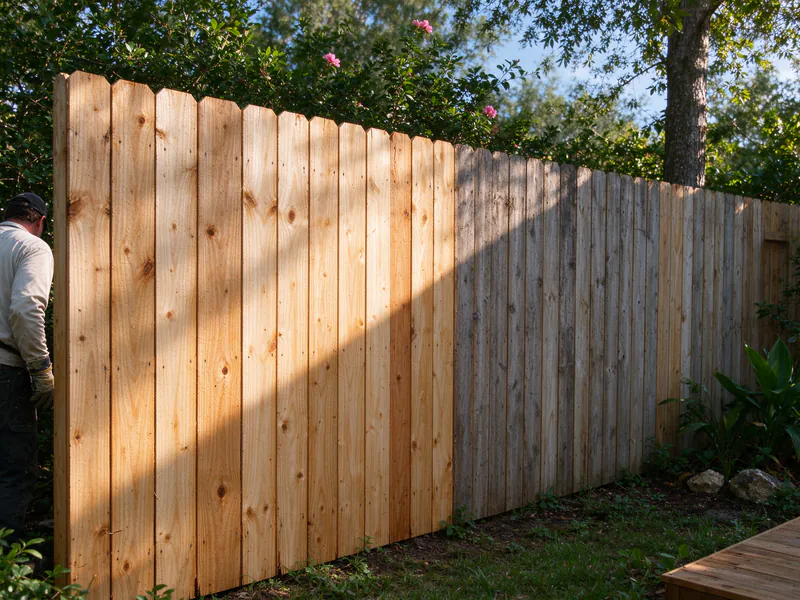
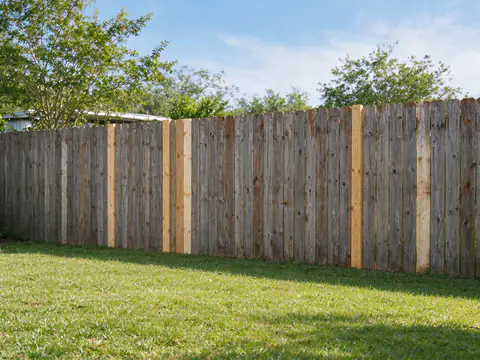
Sunlight breaks down lignin, the natural glue that holds wood fibers together at the surface. Rain washes the loosened fibers out, leaving the silver-gray layer every unfinished fence develops. That layer is weak, so a stain brushed over it sticks to fibers that are already coming loose and fails early.
Water does the rest. A board soaks up rain, swells, then dries and shrinks, many times a season. The surface dries faster than the core, so it splits into small checks, and boards cup as one face dries before the other. Mildew grows on damp, shaded wood, turning it dark. A penetrating stain with pigment slows all three by blocking UV and shedding water.
What happens on the first visit
The first visit walks the fence, measures it and looks at what the finish will go over: the wood species and age, any old stain or paint, mildew, gray surface fibers, loose or split boards and posts that move. It also notes whether one face or both are being done and what is within reach of overspray, such as plants, slabs, siding and parked cars. A post that is soft at grade gets flagged for fence repair before any stain is quoted.
Clear sealer, stain or paint
A clear sealer or water repellent slows water soaking in but carries little pigment, so the sun keeps graying the wood underneath. It suits a fence you want to weather naturally.
A semi-transparent penetrating stain soaks into the wood rather than sitting on top. Its pigment blocks UV, the grain still shows, and when it fades it can be cleaned and recoated without stripping. It is the usual choice for wood fences in this climate.
A solid stain hides more of the grain and evens out mismatched or older boards, but behaves more like a coating and can peel where water gets behind it. Paint gives a crisp color and is what front picket fences often wear, but a paint film peels from cut ends and board bottoms where water enters. The picket fence page covers priming for paint.
When a new fence is ready
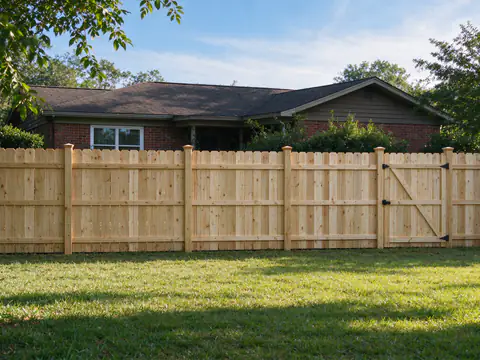
New pressure-treated pine arrives wet with treatment and has to dry before it absorbs a finish. The check is simple: sprinkle water on a board. If it soaks in, the wood is ready; if it beads up, wait a few weeks and try again. Lumber sold kiln-dried after treatment is ready much sooner. Cedar can usually take a finish soon after installation once it is clean and dry.
The wait has a risk in a wet summer. Homeowners report new pine turning black within weeks, which is mildew growing on the damp surface. It is cleaned off before staining. The pine vs cedar guide covers how each wood behaves before and after a finish.
Ask before the new fence goes gray
Send the install date, the wood and the length. Staining is timed to when the boards can take it.
Cleaning comes first
Most of a stain job’s life is decided before the stain is opened. Mildew comes off with an oxygen-bleach cleaner. Gray fibers come off with cleaning and a gentle rinse; a pressure washer held too close tears the soft wood and leaves it fuzzy. Dark streaks around nail heads are often iron reacting with tannins in the wood, which an oxalic-acid brightener lifts where bleach will not. The wood then dries before any stain goes on.
Weather windows in Hammond
Stain needs dry wood going in and dry weather after. NOAA’s normals for Hammond show about 38 days a year with half an inch of rain or more, so a forecast with a clear stretch matters. Heat matters too: on a hot day in full sun a stain can flash-dry on the surface before it soaks in, leaving lap marks and a thin coat. Working in shade or cooler hours, within the temperature range on the product label, avoids that.
How it goes on
Spraying covers rough boards and gaps quickly, but the stain sits on the surface unless it is back-brushed into the wood. Brushing and rolling work on smooth boards and short runs. Board bottoms, cap rails and post tops get extra attention, because that is where water sits longest. On board-on-board fences, the hidden overlap faces can only be reached before the outer boards go on.
Shared fences and historic districts
A fence on the boundary is presumed common to both neighbors under Louisiana Civil Code article 685, and their face of it is reached from their yard. Staining their side needs their agreement; the Louisiana fence law guide covers what a common fence means for upkeep. Staining only one face is common, but the two faces then weather at different rates.
Color can be a design question. In Hammond’s Historic District, exterior work on property fronting a street, fences included, goes to the Historic District Commission with plans showing appearance and color, so a new color on a street-facing fence there is confirmed first. Covington’s historic district guidelines ask that front pickets be painted to complement the house.
Living with the finish
A semi-transparent stain lasts a few years, less on sunny south- and west-facing runs and more in shade. When water soaks in fast and the color has faded, it is time to clean and recoat; waiting until the wood is gray again means more cleaning. Vinyl and aluminum fences don’t need stain, which is part of the case for them in the wood vs vinyl guide.
No finish protects a post at the ground line, where wood fences around here usually fail. The post rot and termite guide explains why, and the fence lifespan guide shows where stain fits among the things that make a fence last. When posts are failing, the repair or replace guide helps decide what comes first.
What fence staining costs
No regional range for fence staining is published that could be quoted with confidence, so no figure appears here. The price follows these drivers:
- One face or both. Doing both roughly doubles the surface.
- Height and style. A 6 ft fence has half again the surface of a 4 ft one; board-on-board and shadowbox add edges and overlaps.
- Cleaning and stripping. Gray, mildewed or previously painted wood takes more preparation than new, clean boards.
- Product. Penetrating oil stains, water-based stains and solid stains differ in price and coverage.
- Access. Shrubs, slabs, pools and tight side yards slow the work and need more protection.
- Wood age. Old, dry wood soaks up more stain per foot than new wood.
There are no rebates or incentives for fence finishes. For a new fence, staining is quoted as its own line alongside wood fence installation.