A new fence is planned from the ground up: the line, the rules that apply to it, and the posts that will carry it. Palisades Hammond Fence installs wood, vinyl, chain link, aluminum and steel fences in Hammond and the towns around it in Tangipahoa, western St. Tammany and eastern Livingston parishes. Installation is carried out by licensed and insured fence contractors.
Every job starts the same way, whether it is a backyard privacy fence, a front-yard picket or a perimeter fence around a whole lot: with a walk of the line.
This page is the overview. It covers how a fence is matched to its purpose, what the first visit records, the permits and the utility locate, the post plan, slopes and the order the work happens in. The material pages, such as wood fence installation and vinyl fence installation, go deeper on each system.
Start with what the fence has to do
The purpose sets the material, the height and how solid the face is, and those three set the post plan. A fence that has to hide a back yard is a different structure from one that only marks the line.
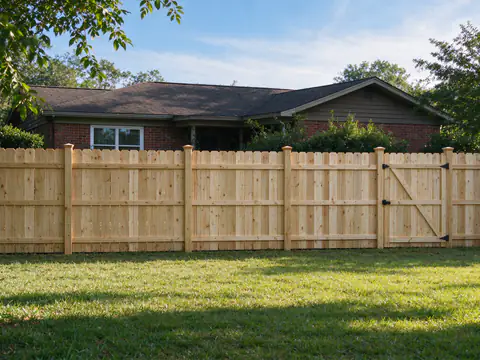
- Privacy for a back yard. A 6 ft solid face in wood or vinyl; see privacy fences.
- Keeping a dog in. Height, no gaps at the bottom and a latch that holds; the dog fence guide compares options.
- A pool barrier. Height, openings and self-closing gates are set by code; see pool fences.
- Marking a front yard. Low and open, 4 ft at most in Hammond; see picket fences and aluminum fences.
- Enclosing acreage. Wire or board on long runs; see farm fences.
- Securing a business. Taller chain link or steel with wider gates; see commercial fences.
A perimeter fence often mixes these. A lot might take 4 ft aluminum across the front, 6 ft wood privacy down the sides and back, and a double gate for a trailer. Each run is priced and built as what it is.
What the first visit records
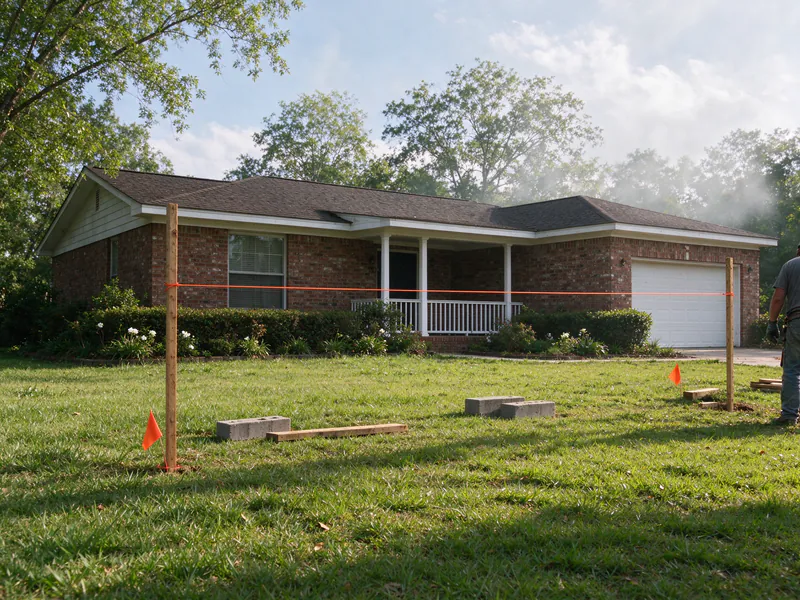
The first visit walks and measures the line. Corners, ends and gate openings are marked, and the run is measured in each section. Grade changes are noted along the way, because a fence that crosses a low spot or climbs a bank needs a different panel layout and loses height on the high side.
Soil and drainage get as much attention as length. Where water stands after rain, where a swale or ditch crosses the line, and where roots or old footings sit in the way all change how the posts go in. Gate positions are settled at the same time, with the swing direction and the clear width each gate needs.
Property questions come up here too, before the price is final. An old fence or a hedge is not proof of the boundary. A fence built on the line is presumed common to both owners under Louisiana Civil Code article 685, and fixing a disputed boundary is governed by articles 784 to 792. Setting the fence a few inches inside the line keeps it yours. The Louisiana fence laws guide explains the trade-off, and the fence planning guide covers the decisions to make before the visit.
Permits, height limits and the utility locate
Inside the City of Hammond, a fence permit from the Building Department comes before any fence is placed, and the city approves the design and the location shown on a survey or parcel map (UDC 4.1.8). The residential fee is $10 and the commercial fee $50, and the fee doubles if work starts before the permit.
The rules that shape a design:
- Front yard: 4 ft maximum, in wood, metal other than chain link or barbed wire, wrought iron or masonry.
- From the front of the house back: solid fences up to 8 ft, with height measured from the lower side of the fence.
- Near intersections: nothing over 3 ft within 30 ft of a street intersection.
- Wire fences: galvanized pipe supports at least 1.5 in, no more than 7 ft apart; barbed wire is not allowed in residential districts.
- Overlay districts: the Hyer-Cate overlay and the Historic District add their own review.
Outside Hammond the rule changes with the address. Covington asks for a $5 permit and a drawing with property lines, streets, fence heights and the building footprint; the Covington page has the details. Mandeville allows 7 ft in side and rear yards under its land use code, and the current text is confirmed per address. Recorded subdivision restrictions can be stricter than any city code. The fence permit guide walks through each step.
Once the permit is in hand, the locate request goes in. Louisiana law counts an augered or hand-dug post hole as excavation and requires notice to Louisiana 811 at least 48 and no more than 120 hours before digging, not counting weekends and holidays (La. R.S. 40:1749.13). A plat may also show drainage or utility servitudes, and Hammond’s code bars a fence that blocks one; the drainage easement guide covers what that means for a line.
Get the line and the rules settled first
Send the address and a survey or parcel map if you have one. The permit route and the layout follow from them.
The post plan
Posts do the structural work of every fence, so they are planned before anything else is ordered. The plan sets post size, spacing and footing for each run, and it changes with the conditions at that address rather than following one depth for every job.
What decides depth and size
Height and face come first. A 6 ft solid panel between posts 8 ft apart puts 48 square feet of face against the wind, and that load levers against the post at the ground line. An open picket or aluminum fence catches a fraction of it. Gate posts carry the weight of a leaf hanging off one side, and corner and end posts take the pull of a whole run, so all three are heavier and deeper than line posts.
Soil comes next. USDA soil survey data around Hammond maps mostly poorly drained silt loams, with a seasonal high water table around 9 inches below the surface at the median point sampled. NOAA’s normals put about 64 inches of rain a year on the Hammond station and only about 31 nights at or below freezing, so frost does not set depth here. Wet, soft ground and wind do. The wet clay post guide explains footing choices in detail.
Digging and setting
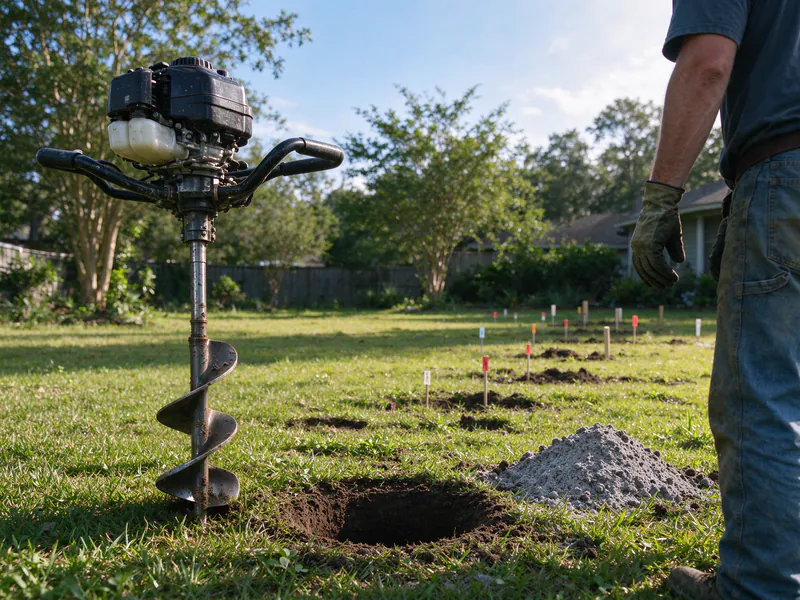
Holes are dug with an auger or by hand after the locate marks are down. A hole that fills with water is common here, and it changes the footing: gravel at the base lets the post end drain, and concrete is finished above grade and sloped away so rain runs off instead of collecting against the wood. Wood posts carry a ground-contact treatment rating; galvanized steel posts are the alternative where wind or wet ground is the bigger risk.
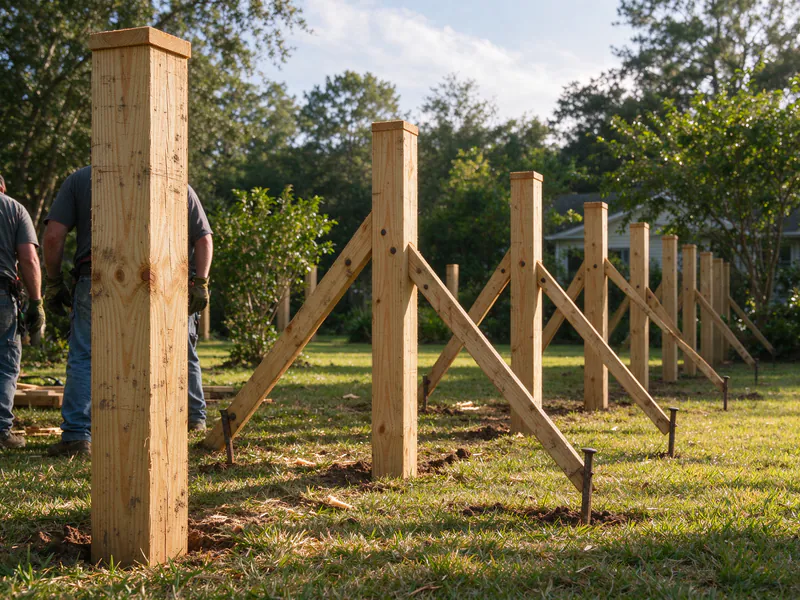
Each post is set to a string line, plumbed and braced. The footings then cure before any rail, panel or gate is hung, because a gate pulling on a soft footing in its first week starts the sag it will have for years.
Slopes: stepped or racked sections
Few lots are dead flat, and the fence has to handle the grade in one of two ways. A stepped fence keeps each section level and drops it at each post, like stairs. It works with any material, including rigid vinyl panels, but leaves triangular gaps under the low end of each section that may need a kick board where a dog has to stay in.
A racked fence tilts each section to follow the ground, so the bottom stays an even distance above grade. Site-built wood racks easily, and many aluminum and steel panels are made rackable within a set limit. On a steep or uneven run, the two are often combined. Because Hammond measures fence height from the lower side, a stepped section on a bank has to be checked at its tallest point, not its average.
Rails, panels and gates go on last
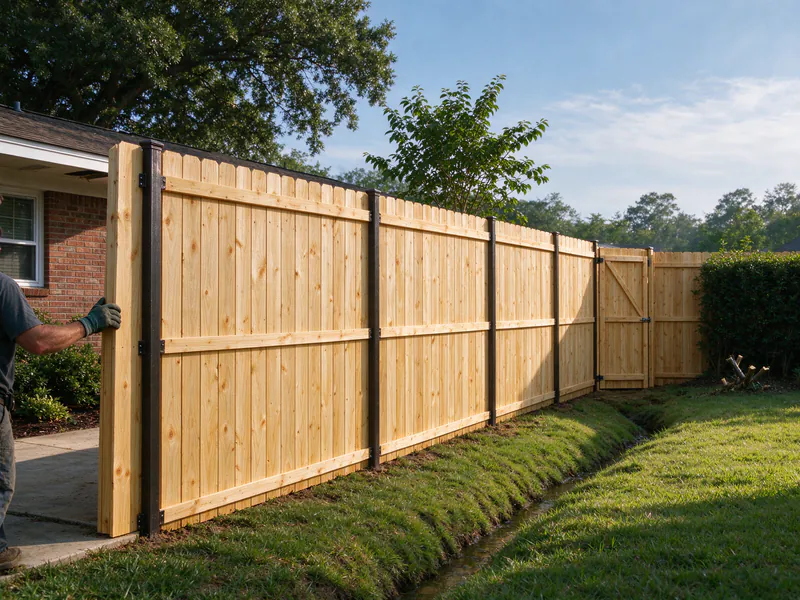
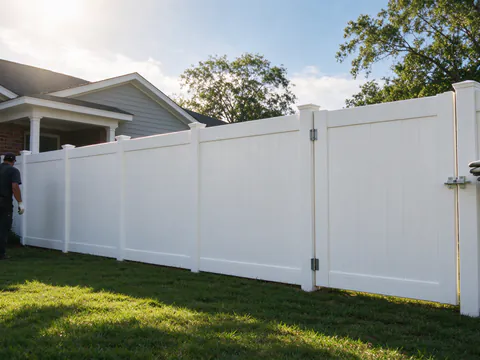
With the posts cured, the frame goes on. Wood fences get rails between posts, three on a 6 ft fence, and boards fastened with hot-dip galvanized or stainless fasteners, since the copper in modern pine treatments corrodes plain steel. Vinyl panels slide into routed posts, often with aluminum stiffeners in posts that carry gates. Chain link gets its top rail, tension bars and fabric stretched between terminal posts. Aluminum and steel panels bolt into brackets on their posts.
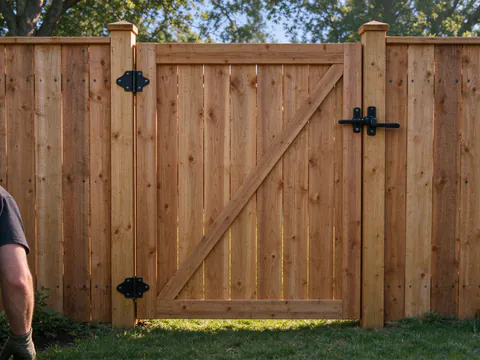
Gates are hung last, on posts sized for them, with hinges and latches matched to the leaf’s weight. The gate installation page covers gate posts, frames and drop rods.
The process from first visit to final walk
- First visit: the line, gates, slopes, soil and drainage are walked and measured.
- Price and plan: material, post plan, gates and any tear-out are set out line by line.
- Permit: the drawing goes to the city or town where one is required.
- Locate: Louisiana 811 is notified before any hole is dug.
- Posts: holes are dug, posts set and plumbed, and footings allowed to cure.
- Tear-out: an old fence comes out and is hauled away when the quote includes it.
- Frame and face: rails, boards, panels or fabric go on, and gates are hung.
- Finish: gates are adjusted, the site is cleaned up and the line is walked with you.
What a new fence costs around Hammond
Typical Hammond-area ranges, installed: about $15 to $45 per linear foot for a 6 ft pressure-treated pine privacy fence, $22 to $55 for cedar privacy, $20 to $60 for vinyl privacy, $10 to $30 for residential chain link, $25 to $55 for aluminum, and $30 to $100 or more for steel or wrought iron. Walk gates add about $150 to $600 each, and removing an old fence about $2 to $8 per foot. These are budgeting ranges, not quotes.
Labor here costs less than the national figure. BLS does not publish a fence-erector wage for the Hammond metro; Louisiana fence erectors earn a mean $19.92 an hour, about 18% below the $24.29 national mean (BLS OEWS). A wage is not a billing rate, since an installed price also carries materials, insurance, vehicles, disposal and overhead. No rebates or grants exist for fences. The fence installation cost guide breaks the price down, and the fence cost estimator gives a range for your length and options.